Symphyotrichum subspicatum ‘Sauvie Snow’

We selected this form of our locally native Douglas Aster for its snow white flowers. The species in our area ranges from blue/lavender/blue-white. So, this is a nice color break. One of the very best pollinator perennials that we grow. In bloom from July-October it is virtually swarmed by every flying insect you can imagine. A constant buzz of activity. This is a large, rambunctious perennial that is not good with delicate neighbors. Douglas Aster belongs in the wild where it can consort with other similarly over-adapted natives. Virtually any soil in full sun to light shade. In bloom it rises to nearly 30″ and the spread is nearly indefinite This is a rugged perennial for tough sites, even areas submerged during the wet season. Not a bad cut flower. Mix with large ornamental grasses such as Miscanthus sinensis  ‘Morning Light’ or Panicum virgatum ‘ Heavy Metal’. Mix with native shrubs- Mahonia aquifolium, Oregon Grape and Holodiscus discolor ‘Ocean Spray’. Drought adapted when established but it appreciates a soak now and again to prolong the bloom period.   Oregon native plant.

Xera Plants Introduction

My Favorites

Plant type:  |  Sun exposure: ,
Biome: , , , ,  |  USDA Hardiness zone: Zn4b -20º to -25ºF
Foliage color:  |  Foliage season:


Symphyotrichum subspicatum ‘Sauvie Star’

One of our color selections of the locally native Douglas Aster. This cultivar originates from seed collected on Sauvie Island. This is the predominant wild Aster of the Willamette Valley. A boisterous long blooming perennial at home in wild areas. Rich to average soil with light summer water. Blooms- in this case, periwinkle blue open in early August and continue unabated  to October. They are beacons to all pollinators and are constantly in motion as they bloom. To 32″ tall  forming wide patches. Runs by underground stolons. Nice cut flower. Wetland remediation, forest verges, denuded road cuts. Those are jobs for you Douglas Aster. Oregon native plant.

Xera Plants Introduction.

My Favorites

Plant type:  |  Sun exposure: ,
Biome: , , , , ,  |  USDA Hardiness zone: Zn4b -20º to -25ºF
Foliage color:  |  Foliage season:


Tanecetum densum ‘Amani’

You can’t resist the finely divided feathery nearly white foliage of this great small scale ground cover. Foliage to 4″ tall and spreading to 2′ wide in full sun and well drained soil. Light summer water. Small flowers lacking petals have a center of off white/gold in early summer. Excellent performance on slopes as well as rock gardens.  Evergreen. Loves life in the hellstrip.

My Favorites

Plant type: ,  |  Sun exposure:
Biome: , , ,  |  USDA Hardiness zone: Zn6a -5º to -10ºF
Foliage color:  |  Foliage season:


Ternstroemia gymnanthera

Obscure but exceedingly handsome and reliable shrub for hedges, specimens, eventually a small tree. Rounded leaves are good looking year round and especially when they first emerge brilliant salmon red before settling to dark green. This is the most showy display on this plant and it lasts for weeks. In mid-late summer small pendant white/cream flowers are nestled among the leaves, you really have to look to see them. Clean evergreen whose foliage is never marred by fungus or cold. Full sun to high overhead shade. To 8′-10′ tall and about half as wide. With great age and no pruning it can achieve small tree status and it forms attractive cloud like crowns of foliage. As a hedge  it excels. Plant 2 gallon plants on 3′ centers and mulch. Irrigate about once a week until you see good new growth. Established plants are very tolerant of dry conditions. Theaceae- Camellia family. Excellent cold hardiness to 0ºF, tolerates some subfreezing wind. Excellent companion plant for Rhododendrons, Pieris, Illicium. Full sun to quite a bit of shade. Native to Japan.  Good looking tough plant. Light deer resistance.

My Favorites

Plant type: ,  |  Sun exposure: , ,
Biome: , ,  |  USDA Hardiness zone: Zn7a 5º to 0ºF
Foliage color: ,  |  Foliage season:


Tetrapanax papyifera ‘Steroidal Giant’

Big form of the already big Japanese Rice Paper plant. Enormous 3′ wide leaves look jurassic and erupt in spring from seemingly spindly bare stalks. Fast growing deciduous shrub/tree that also suckers to form wide colonies. To 18′ tall in 5 years with multiple trunks in deep rich soil with regular irrigation. Full sun to part shade. Be aware that this plant travels. It moves stealthily underground and can be many feet away from the parent plant before you notice it. The more root disturbance the more errant suckering. Give it room and respect. Light summer water. Almost blooms each autumn before running out of heat and daylength. Bare sticks in winter. It may also be contained the same as bamboo. It is, however, easy to pull the suckers by hand. Wait until they grow several leaves and then grab it by the stem and wiggle, slowly at first then in wide arcs and pull. It will pull right up. Also, there is a conspicuous indumentum (brown fur) all over the plant and especially the leaves, these tiny hairs when rubbed off or disturbed can cause skin irritation in some people. Wear gloves and a rain coat while pruning.

My Favorites

Plant type:  |  Sun exposure: ,
Biome: , , ,  |  USDA Hardiness zone: Zn7a 5º to 0ºF
Foliage color:  |  Foliage season:


Teucridium parviflorum

A stylish shrub/subshrub that is native to the drier parts of New Zealand, and offers great fine texture. The stems which are the only thing that differentiates this from the genus Coprosma- they are square. are golden orange woody stems that  rise up to about 4′ tall by 3′ wide.  Tiny round green leaves decorate these stems and in late spring and early summer small white flowers appear in the leaf axils. This plant can quickly return from the roots if chopped back severely or frozen to the ground. Established plants can regain their stature in several months. Average to enriched soil that is never boggy in summer. The fine foliage  common adaptation in New Zealand, most likely the fine texture of the shrub was to foil grazing giant moa birds and other predators. Very good in containers ( it will be less hardy in a container as with  everything) and it can be crowded heavily and still thrive. In the ground give it enriched soil and regular summer water for its first season. Let it grow as much as possible and develop a resilient root system- in the case of an arctic event it will be well prepared to regrow.. Mulch in fall for the first year. The luminous stems and see through appearance make it combine well with bolder textured plants. Regiar water in summer speeds growth and establishment the first year, in subsequent years it only requires irrigation once every two weeks. Freezes the ground at about 20ºF, returns quickly in spring when the soil warms. Not bothered by deer, not sure about rabbits. Excellent architectural plant. We took a break from growing this plant for years, we’re happy that its back.

My Favorites

Plant type: ,  |  Sun exposure: ,
Biome: , , ,  |  USDA Hardiness zone: Zn8a 15º to 10ºF
Foliage color:  |  Foliage season:


Teucrium aroanum

Low ground cover Germander that is at home in hot sunny aspects in well drained conditions. The fine gray foliage rises to 5″ tall and forms a spreading plant.  Beginning in early summer and extending to fall soft purple to lavender clusters of flowers cover the surface of the plant. Though small this plant is a huge hit with pollinators. Full, hot sun and light summer water to establish. Not a fan of heavy soils and sodden conditions  In the wild this plant is primarily a resident of rocky sites and hillsides of the Mediterranean. This ever gray perennial is good looking in winter. Foliage is aromatic and has fruity tints to the fragrance. Mix with other smaller rock garden plants or develop a small area that acts as a groundcover. Loathes shade. Good container or trough plant. Grows up to 18″ wide in several years. Pollinator masterpiece. Moderate deer resistance.

My Favorites

Plant type: ,  |  Sun exposure:
Biome: , ,  |  USDA Hardiness zone: Zn7a 5º to 0ºF
Foliage color:  |  Foliage season:


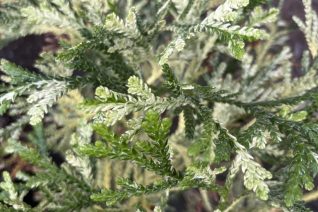
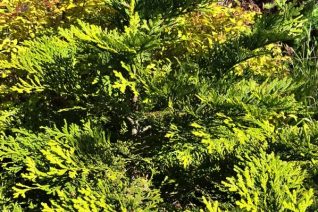
A fantastic, tough and exotic looking evergreen (conifer)  that is striking and easy to grow. To 4′ in 10 years, a slow growing shrub that is often as wide as it is tall. The scale leaves are deep glossy green liberally splashed with cream. The large leaflets protrude from a single trunk and is layered like a gigantic moss. The foliage is glossy on the surface and dull beneath. Wonderful specimen or even small hedge. Scaled very well for large rock gardens. This is a very rare form of this enchanting species native to Asia. Full sun and water to establish, let it dry between irrigating, then in a year or two it can survive on natural rainfall alone. Very cold hardy and takes the subfreezing wind from the east with no damage. Excellent in the Columbia River Gorge. Not bothered by deer,and likely not bothered by rabbits, but we are not 100% sure, but its worth a try. Good appearance year round.

My Favorites

Plant type: ,  |  Sun exposure: ,
Biome: , , , ,  |  USDA Hardiness zone: Zn6a -5º to -10ºF
Foliage color: , ,  |  Foliage season:


Elk Horn Cedar is originally from Japan but is grown around the globe This layered and refreshing glossy green conifer grows very slowly and looks fantastic year round. Slow growing to 3′ x 3′ in 10 years. Excellent in mixed borders or shrub borders. Water well to establish the first summer then occasional deep soaks in summer. Unlike any other confier the name elk horn refers to the flat leaflets that look to me like a form of giant moss. Works well in winter containers. The flattened scales are glossy on the surface and dull beneath. This is the darker green of two varieties in the nursery trade. It would make a challenging bonsai. Full sun to light shade in rich to average soil .  Not often deer food, very worth trying. Cold hardy below 0ºF for short periods. Excellent performance in the Columbia Gorge.

My Favorites

Plant type:  |  Sun exposure: ,
Biome: , , ,  |  USDA Hardiness zone: Zn6a -5º to -10ºF
Foliage color:  |  Foliage season:


Tigrida x pavonia

Is this hardy? Why, yes, yes it is. Mexican Shellflower or just Tigridia is a fun bulb that produces large, immensely showy flowers that last but a day. Three large petals emanate from a wildly speckled center. White, red, orange, yellow, and pink flowers are all represented in this mix. Rich, well drained soil in a warm position- mine are on the south side of my house in average soil and they not only multiply year to year they self sow. The wonderful flowers appear individually for weeks in mid to late summer. Add a handful of all purpose fertilizer when planting and water consistently through bloom. Full sun- no fudging here. Very easy to grow. To 20″ tall in bloom on average. Flowers 3″ wide. -Emerges late in the spring- usually mid-May. Patience.

My Favorites

Plant type:  |  Sun exposure:
Biome: , , ,  |  USDA Hardiness zone: Zn7b 10º to 5ºF
Foliage color:  |  Foliage season: