
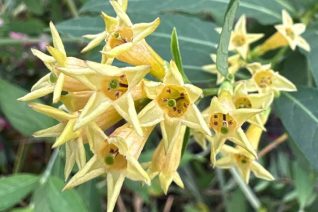
Chilean Jessamine, this is a large growing sub shrub that blooms on new wood and produces clusters of small tubular yellow flowers that pump out a heady perfume at night. Large mid green leaves line sturdy stems. Freezes to the ground in winter in the mid-teens or lower. Roars alive with warm weather and can become a shrub 5′ x 5′ even if cut to the round in one season. The flowers at terminal ends of the shoots close during the day and yawn open at night. Its a good light yellow and is a great companion for other bold plants. such as Aralia californica and cannas. Excllent in very large containers. Rich soil with regular irrigation speeds growth and bloom. Begins growing when temperatures remain in the 70’s for highs, be patient. The fragrance is fruity in a citrus kind of way and doesn’t appear until nightfall. Not bothered by deer or rabbits. Excellent plant for the back of a border. Mulch for the first winter. Chile/Argentina.
Biome: Rabbit Resistance
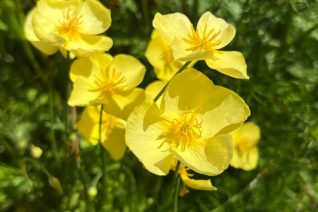
Eschscholzia caespitosa
Golden poppy is native to the inland valleys of southwest Oregon. This charming annual is much more delicate in habit and color than its more common bolder cousin Eschscholzia californica the ubiquitous California poppy. This little jewel demands a hot sunny location in soil that is average, and not improved. It will self sow locally but nothing like its cousin. This demure little poppy blooms from late April to mid-June. Full sun is vital. Mix this charmer with other similarly adapted annuals. Collinsia grandiflora, Plectritis congesta, Gilia capitata. Very deer and rabbit resistant. Water potted plants to establish, resown babies in the future can get by on natural rainfall alone. Oregon native plant

Eschscholzia californica ‘Cream’
A very favorite annual or short lived perennial. This excellent California poppy sports ivory to cream large flowers for an extended period in summer. Fine blue foliage is wonderful with the softly colored flowers. Blooms from April to August if you give it a little water- but never soggy. Full sun to the very lightest shade in average to enriched, well drained soil. Un irrigated plants will bloom for a shorter period and set seed. The seed comes true about 90% of the time. Cull orange or other colors that don’t please you. It may become a short lived perennial if treated well. New plants germinate en masse with the first autumn rains. Don’t be afraid to thin your patch a bit then. Rough areas, along gravel paths. Easy to grow. Containers, Hellstrips. Etc. High deer resistance. Oregon native plant.

Eschscholzia californica ‘Jelly Beans’
Spectacular mix of double flowered California Poppy in shades of pink, yellow, apricot, rose, red, orange, and yellow- and more colors than that. Easy to grow plants that can even be perennial if happily sited and cared for. Otherwise an incredibly showy annual that also makes a great cutflower- cut in bud and they will last several days. Sophisticated selection of our own native poppy and they will most likely reseed in open disturbed sites. Blooms May-August and sometimes longer. Remove spent flowers to encourage more. Leave the final round of blooms to set seed for the following season. To 1′ x 1′ with beautiful lacy glaucous foliage. Rough areas in full sun with light summer H20. Highly deer resistant. Oregon native plant.

Eschscholzia californica ‘Pretty in Pink’
True pink California poppy. Seed from this exceptional pink flowered selection comes true about 95% of the time. Deep rose pink semi-double flowers appear in late spring and continue sporadically until mid summer. A happy plant can become a short lived perennial but the majority will behave as bloomy annuals. Full sun and rich to average soil with good tilth (crumbly texture). It can even thrive in compacted soils. To 10″ x 10″ forming a compact plant with lacy blue foliage. The strident rose pink flowers are showy from a distance. Leave the last round of flowers to seed for the next several seasons. Excellent wildflower display in rough areas w/ low water. Water plants to establish then taper off. Remove spent flowers to encourage more. Wonderful flower color. Mix with Eschscholzia c. ‘Alba’ the white form. Deer resistant and drought adapted native plant. Oregon native plant.
Xera Plants Introduction

Eschscholzia californica ‘Purple Gleam’
One of my favorite separate strains of CA poppy. ‘Purple’ gleam is a tiny bit of an over statement. More accurate its pink w/ purple overtones and a lighter center. Blooms from April August in a wave of big flowers that tossles over compact plants with filigree blue foliage. Full sun and average to even poor soil. Often potted Eschscholzia will perennialize and live for a year or two in the ground. Otherwise its an annual and will succumb when the whole plant blooms itself out. To 10″ x 12″ forming a spreading plant. Remove spent flowers to continue the show. Many plants will take a break over summer and then resume blooming w/ cooler autumn rains. Great pollinator plant. Containers, dry areas, borders. Reseeds reliably w/ about 80% true to parent type. Wonderful with Clarkia unguiculata ‘White’ and Collinsia grandiflora. High deer resistance. Leave open disturbed soil for it to reseed. Light summer H20. Oregon native plant
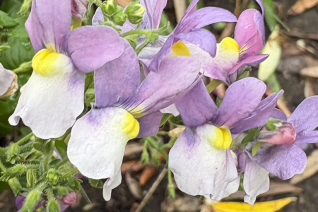

This is an interesting discovery in my garden. I bought this plant as part of a 6 pack of annual color years ago. This species is hardy in our climate but it usually comes back in a wimpy way. Enter this individual seedling that is extremely vigorous, cold hardy, and unlike the species it blooms continuously through the heat of summer. This Nemesia does not take a break in the mid summer heat. To just 6″ tall by 2′ wide this continuously blooming perennial has small snapdragon-like flowers in clusters that have a lower lip of white with a touch of yellow and upper petals that are gray and change to purple. Best in enriched soil with regular water in summer. It begins blooming straight away in May and continues until frost. Loved by hummingbirds and pollinators. It makes a great perennial container plant that is so prolific in bloom for such a long period you might think it was an annual. Loves rich soil and organic fertilizer. Cold hardy below 10ºF and disappears completely in cold winters, emerges in April. Excellent at the front of borders and trailing down rock walls. Easy and pretty perennial. Not bothered by rabbits. Native to high elevation South Africa. Mix with other smaller scale perennials such as Armeria or Diascia, Campanula ‘Dickson’s Gold’. Remove spent flowers to encourage more.
Xera Plants Introduction
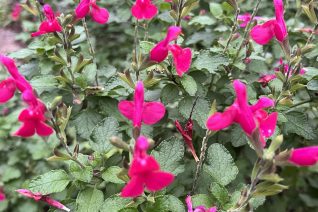
Salvia ‘San Carlos Festival’
Always on the lookout for cold and wet tolerant Salvias, this one has been a winner. Forms a woody structure topped by lush light green foliage. Beginning in July and continuing until frost hot magenta pink flowers appear again and again. Loved by hummingbirds and all sorts of pollinators. Incredibly long blooming plant that gets by on a minimum amount of water each summer. Very well drained rich soil. Regular summer water speeds growth and makes a bigger plant that is ultimately hardier to cold. Laughs at the reflected heat of hellstrips. To 2′ x 2′ in a season. Regenerates from the roots following a hard winter. Cut back in early spring after all danger of frost has passed. Faithful deep soaks will propel it to bloom well into autumn.

Salvia barrelieri
We love North African Sage from the higher elevations of Morocco it performs beautifully in our climate. A rosette of low large sage green leaves is your first clue that this is a cool species. In summer 4′ spikes in whorls of blue and white flowers are spectacular. The blooms last a long time (6-8 weeks) and are awesome for cutting and including in huge, wild flower arrangements. Forms large clumps in time and there will be more and more flowers. Full sun, rich, well drained soil with regular summer water to establish after which light to little summer water is necessary in our climate. Very easy to grow and cold hardy. May self sow in open disturbed sites. Great Salvia but surprisingly difficult to find.

Salvia gregii ‘Rossetto’
Excellent seedling of ‘Playa Rosa’ with deep clear pink flowers for months and increased cold hardiness. To 20″ x 20″ in a season this is a ‘woody’ sage that forms a small shrub. The vivid pink flowers begin in late May and continue to frost. It takes a break from blooming in extreme heat (above 95ºF) but flowers return when cooler air arrives. Full hot sun to part shade in rich, WELL DRAINED soil. A slope is ideal- especially if it faces south. Light, consistent summer water, speeds growth, establishment and spurs rounds of bloom. Loved by hummingbirds and butterflies. Do not cut back until early spring- when all signs of a hard freeze have passed. It may be cut back hard then and will quickly erupt into a blooming machine. Great in seasonal containers. ‘Rossetto’ is lipstick in Italian. Thanks to my friend Ann Amato for the name.
Xera Plants Introduction