Jasminum x humile ‘Sunshine’

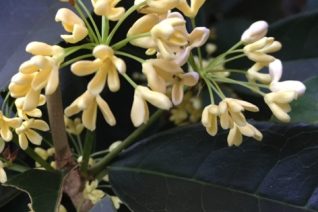
This form of Himalayan Jasmine we chose from seed after its incredibly fragrant yellow flowers drew our attention. Rather than cloying and sweet its a sophisticated aroma that is never over bearing. I always wish it was a bit stronger. Smaller leaves than the species and many, many more flowers in a huge display in late spring and sporadically until frost. Fast, large growing deciduous shrub that is incredibly tough and drought adapted. Takes any amount of pruning. May be trained as vine if you are diligent. To 9′ tall and 5′ wide quickly. Excellent plant for hedgerows and tough conditions out back. Black berries follow the flowers .Jasminum humile x jasminum wallachianum. Thousands of yellow stars.

Xera Plants Introduction.

My Favorites

Plant type: ,  |  Sun exposure: ,
Biome: , , ,  |  USDA Hardiness zone: Zn7a 5º to 0ºF
Foliage color:  |  Foliage season:


Olea europea ‘Frantoio’

We’ve grown this extraordinarily cold hardy european olive selection for years. And its performance in the city of Portland is stellar. Fast growing somewhat wild looking, ever-silver tree to 20′ tall and 15′ wide in 10 years. In time it develops a gnarled trunk adding to the trees character. This is a self fertile selection and sets fruit very heavily even on singular trees. The fleshy moderately sized fruits are most prized for oil. They may be brined. (Follow any recipe on the internet). Be aware of autumn and winter fruit drop- not for patios, instead plant a large ground cover at the base for the unwanted fruit to drop and hide. Birds will eat the olives too- especially larger birds.  Overall, its a pretty tree when the thin blue gray leaves are tossed by the wind revealing their silvery undersides. Fast growing especially if watering is frequent and diligent during youth. Water like crazy for the first summer to spur growth and establishment. Olive trees gain cold hardiness with age/size. Small plants are tender to dead below 15ºF but a three year old, well watered of the same variety will be undamaged at much colder temperatures than that. Excellent performance in ice and snow (see picture below)- bends but does not break. Protect containerized plants from temperatures below 15ºF. Drought adapted when established. A warm position.

My Favorites

Plant type:  |  Sun exposure:
Biome: , ,  |  USDA Hardiness zone: Zn7b 10º to 5ºF
Foliage color: ,  |  Foliage season:


Osmanthus fragrans var. aurantiacus

One of the coolest shrubs that we can grow and incredibly rare in our climate. Large evergreen shrub or small tree to 12′ tall and forming a dome. Prolifically nestled among each leaf axil clusters of vivid but small ORANGE flowers with the fragrance of juicy fruit gum  appear in October-November. A shrub in full bloom is detectable many many feet away. Handsome large leaves contrast with pale tan stems and bark. Full sun to part shade and rich to average well drained soil with light summer irrigation. Drought adapted when established. Grows 1′-2′ a year- picks up speed when older. Hardier to cold than most forms of regular Osmanthus fragrans. Protect from subfreezing winds. Seems to require summer heat to set flowers as well as harden off for winter weather. Unlikely to thrive in cool summer climates. (NOTE: this plant seldom looks good in a pot, one of the reasons its not often seen for sale. The fertilizer that is necessary also distorts new leaves- This is not a problem in the ground). We’ve been hesitant to sell this because of the weird leaf distortion but it goes away immediately with installation in the ground. And we just love it so much.

My Favorites

Plant type:  |  Sun exposure: ,
Biome: , ,  |  USDA Hardiness zone: Zn7b 10º to 5ºF
Foliage color:  |  Foliage season:


Osmanthus armatus Lemon Line ™

A wonderful sister to our  variegated selection of Osmanthus armatus ‘Zipline’. This all gold form emerges tinted in red before the leaves turn to an illuminating lemon, lacquer yellow.  The symmetrically spined leaves add to the display. Full sun to part shade. Variegation is brightest in full sun. Moderately fast growing and glowing evergreen shrub for average to enriched soils. Ligjht consistent summer water to establish, then occaisionally depending on aridity. To 4′ x 4′ in 6 years and then progressive larger. Shares the same toughness as the species enduring temperatures slightly below 0ºF. Tiny white flowers are adorable in fall but add little. Not fragrant that I can detect, but the glory of this shrub is in how vivid the foliage shines. Not perfectly drought tolerant, check it before heat waves. Other than that its handsome year round and gets better with age. Tolerates some subfreezing wind. Not the first shrub/tree on a deers list but you never know. Mine is home to the deep blue flowered Clematis ‘Rhapsody’ for a brilliant contrast.

Xera Plants Introduction

My Favorites

Plant type: , ,  |  Sun exposure: ,
Biome: , , ,  |  USDA Hardiness zone: Zn6b 0º to -5ºF
Foliage color:  |  Foliage season:


Osmanthus armatus Zipline™

Sometimes the garden goddess smiles on us. I found this sport (a variegated stem) on my Osmanthus armatus ‘Jim Porter’ and I separated and rooted it. It has become a fantastic extremely showy shrub. This is welcome because Osmanthus armatus is not a particularly conspicuous species. It has serrated deep green leaves and small white flowers in autumn that emit a faint but sweet fragrance. Variegation improves the species markedly. The variegation is very stable, I have yet to see any reversions. Each leaf is symmetrically serrated and the variegation is vivid and adds an incredible amount of depth. Large growing shrub to 9′ x6′ in 10 years. Excellent cold hardiness on a brilliant evergreen. Full sun gives the best variegation and I have yet to see it burn in the hottest conditions. Excellent specimen, hedge, or screen. Cut foliage lasts for about 1 week in a vase. Light consistent summer water to establish then very tolerant of dry summer conditions  Cold hardy slightly below 0ºF and durable and long lived. In time it can make small tree status which makes a very striking tree. A wonderful shrub and a happy discovery, See video below.

Xera Plants Introduction

My Favorites

Plant type:  |  Sun exposure: ,
Biome: , ,  |  USDA Hardiness zone: Zn6b 0º to -5ºF
Foliage color:  |  Foliage season:


Osmanthus armatus ‘Jim Porter’

Fantastic large evergreen shrub that always looks its glossy best. Finely serrated glossy, deep green leaves become less spiny as the shrub matures. In November and December tiny slightly fragrant white flowers crowd along the stems. Moderately fast growing to 12′ tall and 6′ wide in 7 years. Full sun to almost full shade in rich to average well drained soil. Handles clay soils with aplomb. Light summer water to none when established. A first rate large hedge or screen. A nice specimen as well. Very tough, cold hardy and easy. Grows 2′-3′ a year


My Favorites

Plant type: ,  |  Sun exposure: , ,
Biome: , ,  |  USDA Hardiness zone: Zn7a 5º to 0ºF
Foliage color:  |  Foliage season:


Osmanthus decorum ‘Baki Kasapligil’

Osmanthus are incredibly handsome and useful shrubs/trees and turkish Osmanthus fits that trend  Renowned for fragrance this tough species excels at its tidy and uniform look year round. Long pointed deep green leaves are exceedingly handsome and immediately one thinks of this 8′ x 8′ shrub as an ideal  hedge subject and it is. In mid spring small tubular flowers crowd the leaf axils and emit a vanilla aroma that is detectable many meters away. Moderately fast growing evergreen for full sun to quite a bit of shade it is adapted to most well drained soils, including heavy clay. Exceptionally tolerant of drought when established  and very long lived. In time, sans pruning, it will achieve small tree status. Cold hardy to 0ºF and not terribly sensitive to subfreezing wind. Not often bothered by deer- protect young plants with age and familiarity they will leave it alone.  Very good replacement hedge for voracious and invasive cherry laurel or disease riddled Photinia.  Somewhat formal appearance.  Lovely no water/low water shrub when established.  Prune after flowering- blooms on old wood This is one of the parents of Osmanthus x burkwoodii. .This form was selected from the wild in  Turkey/Anatolia.

My Favorites

Plant type: ,  |  Sun exposure: , ,
Biome: , , , ,  |  USDA Hardiness zone: Zn7a 5º to 0ºF
Foliage color:  |  Foliage season:


Osmanthus delavayi

Regal, tough, evergreen shrub that loves our climate and performs beautifully in a host of situations. Small holly like deep blue green leaves are completely obscured by masses of small, white, sweetly fragrant, tubular flowers that crowd the stems in April. Beautiful. To 4′ x 6′ in 6 years. Full sun to quite a bit of shade which doesn’t diminish bloom. Rich, to average soil including dry clay soils but never anywhere there is standing water. Extraordinarily drought tolerant when established and will still thrive and bloom with none. Elegant clipped hedge which will become dense and still bloom heavily. The leaves are small enough that shearing does not mangle them. Long lived and cold hardy to 0ºF. Easy, elegant broad leaved evergreen. AKA Delavay Tea Olive.

My Favorites

Plant type: ,  |  Sun exposure: ,
Biome: , , ,  |  USDA Hardiness zone: Zn7a 5º to 0ºF
Foliage color:  |  Foliage season:


Osmanthus fragrans

Long ago I dismissed this tall sweetly scented Tea Olive as hopelessly tender in our climate. Then in a garden in Lake Oswego under towering firs I ran head on into an 18′ tall perfectly happy specimen. Looks like it had never suffered damage. It was just a really nice broadleaved evergreen tree. Copious amounts of small off white flowers crowd the stems beginning in autumn in our climate and then sporadically until spring. The POWERFUL fragrance they emit is that of apricot/freesia/rose and it travels- detectable 20′ away when in full bloom. To 15′-20′ tall apparently. Requires protection as a young plant and it really should not be in an exposed site. Instead locate near a house wall- where you can open the windows and let the perfume flow- and gain added protection. Gains much, much, greater hardiness with age. Summer heat seems to play a role- the more heat in summer the hardier in winter. Full sun to high overhead shade. Grows 2′-3’/yr. when young- aided by consistent summer water. Otherwise established trees need little. Not a plant for cold gardens.

My Favorites

Plant type: ,  |  Sun exposure: ,
Biome: ,  |  USDA Hardiness zone: Zn7b 10º to 5ºF
Foliage color:  |  Foliage season:


A local form of Fragrant Tea Olive that was discovered as a seedling in Phil Thornburgs wonderful SE Portland garden. He has a large estabished collection of the genus Osmanthus and this seedling has turned out to have several exemplary attributes- So we named it for the gardener. A moderately fast growing evergreen small tree to 16′ in 10 years. Large glossy foliage emerges tinted a very striking russet red before settling to deep green. This new growth follows the flowers which in our climate appear from late fall to early spring – on wood that is more than one year old. Parchment colored tiny flowers ring the stems and emit one of the most penetrating  perfumes in the floral kingdom- sweet apricot and freesia  These flowers are dried and used to flavor tea in China. The trunk/stems are a soft taupe color that contrasts nicely with the dark green foliage. We have observed excellent cold hardiness but  it should still be protected from subfreezing east wind during arctic events. The west side of a building is ideal- and you can appreciate the sweet perfume in winter just by opening a window.  Somewhat formal looking small tree that has a conical habit in youth and then a spreading crown with age. Water to establish, then light water during summer drought. Full sun to light shade. Gains hardiness with age/ establishment. Protect young plants from temperatures below 15F- cover with a cardboard box. Excellent tree for courtyards, the slim areas between modern architecture. Wonderful tried and tested local selection of an infamous tree native to large parts of Asia. Durable, almost formal, verdant look year round.

Xera Plants Introduction

My Favorites

Plant type: , ,  |  Sun exposure: ,
Biome: ,  |  USDA Hardiness zone: Zn7b 10º to 5ºF
Foliage color: ,  |  Foliage season: