

Lantern plant. The hardiest flowering Maple by far, sailing through all but our most treacherous winters. Large-growing lax shrub with large red calyxes that contrast with the protruding yellow petals. Masses of flowers appear on new wood from June to frost. To 6′ tall and as wide in full sun to part shade. Plant in a protected spot. Near a wall or within shrubs that can shield the crown. Water winter-damaged plants in the ground very heavily and they will make a surprise re-emergence. Hummingbirds.
Zone: Zn8a 15º to 10ºF
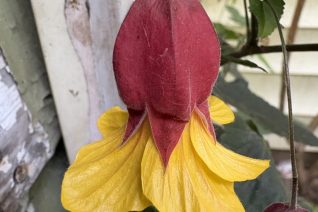
Abutilon (Callianthe) megapotamicum (a) ‘Marianne’
Improved selection of the Chinese Lantern Plant- which is actually from South America, and this form has larger more flared yellow petals. They extend and recurve from the bold red calyx. This arching multi-stemmed shrub blooms almost non-stop from June to frost and often longer. Vigorous to 6′ tall and 4′ wide forming a large patch in time. The arching thin stems and skinny pointed leaves display the rows of flowers perfectly. A hummingbird delight. One of the hardiest to cold this behaves as a sub-shrub in the coldest winters- freezing back but returning boldly from the ground when the soil warms. Most winters, damage is restricted to burned tips and the majority of leaves which will drop. Plant with the base in a protected location- for instance between low shrubs to protect the crown, or near the base of a wall. Mulch if arctic (below 20ºF) weather threatens. Following a freeze the plant will look absolutely awful. Refrain from cutting it back until you see new growth emerge- either from the base or vertical stems. In any case water it consistently and heavily until you see vigorous new growth- the transformation with regular water is remarkable. So, don’t by any means give it up for dead. Full sun to quite a bit of shade. A bit tall and lanky for containers- just plan for this. Rich, WELL DRAINED soil improves both cold hardiness and speeds recovery. Excellent performance at the Oregon Coast. Very bardy suffering no LEAF damage i the ground for the past 6 winters. uh, huh.

Abutilon (Callianthe) megapotamicum (a) ‘Red’
Everything about this form of hardy flowering maple is identical to the species except the molten red flowers with deeper veins shot through. The 2″ pendant flowers appear from May to October on a large growing sub-shrub. To 6′ in a single season It makes rapid growth as temperature rise above 70ºF. Full sun, in a protected location in rich soil with regular summer irrigation. Abutilons look absolutely horrific in spring even after a normal winter. Expect this. The solution is to water, water, water especially as the temperatures rise. It blooms on new wood and flowers are continuous as the shrub grows. Mostly deciduous but it can be evergreen at the coast or in protected places in mild winters. Loved by hummingbirds who are lured by the lurid red flowers filled with nectar. Cut back by 1/2 after all danger of frost has passed. Supply a handful of all organic fertilizer and water faithfully. Excellent performance at the Oregon coast. Inland it is best with the protection of a shrub covering its roots so that the soil does not freeze. In this situations it can live even thrive for many many years. Mulch with compost. Native to the mountains of Brazil. Root hardy to about 10ºF. Long lithe stems can be woven through a fence or a lattice.

Abutilon (Callianthe) x ‘Tangerine Scream’
A relatively hardy and massive blooming Abutilon that we named for its small but vivid tangerine orange flowers. A tall grower, easily reaching 4′ in the ground in a single season. Excellent in containers in full sun but be warned it gets big, fast. In the ground it has been a great performer. It requires a very protected location- between shrubs that will protect the base or near a house wall- under those conditions it will freeze back below about 20ºF but will be able to return from the base. And don’t be discouraged in spring if this plant looks dead- just water, water, water, in April-June and you’d be surprised at the vigorous recovery that will take place. It helps if it is in rich, well drained soil. Hummingbirds love it. Excellent performance at the Oregon Coast where it will seldom be bothered by cold and can bloom nearly year round.
Xera Plants Introduction.
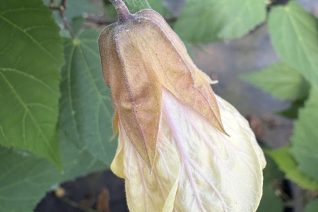

We selected this Abutilon from a seed batch eons ago and it still holds up as one of the best. Upright growing sub-shrub to 6′ tall in a season. Profuse bloomer produing ginger / parchment colored pendant flowers from a contrasting russet/ beige calyx. This incredibly unique flower color mixes with a huge range of hues. It can even hold its place with bright red flowers. Everblooming, rich soil, and regular water with several handfuls of organic fertilizer scratched around the base of the plant- 2, 3 times per growing season. Surprisingly cold hardy its spring appearance would not lead you to believe that. In a normal winterF – above 15º, it will likely freeze back by 2/3rd below that it will die to the ground. Spring recovery is a combination of all organic ferilzer and water and warmth. Seemingly from dead sticks life will emerge and if you are consistent with water recovery and bloom is fast , usually in bloom by June and continuing until frost. Excellent container plant and it may act as a seasonal plant that way. Loved by hummingbirds and butterflies. A wonderful, blendable, sophisticated flower color. Mulch for its first winter to protect the base. Full sun to part shade. Naturally fine branching with large arrow-shaped mid green leaves. Protected location. 3′ x 4′ in a season.
Xera Plants Introduction

Acacia covenyi
An exciting shrub/small tree with paddle shaped blue evergreen phyllodes for foliage and in late winter to early spring a massive display of luminous yellow flowers. I’ve always loved Australian wattles so it was with great excitement that we decided to grow this striking plant. Moderately fast growing to 16′ tall and 8′ wide forming either multiple or a single trunk. The bark is chocolate brown and smooth. Very few Australian Acacias will thrive in Portland, its just about 5 degrees too cold in our coldest years. This one is different, (a few species will live for 4-6 years before they finally succumb to Jack Frost. Acacia pravissima etc.) This, however, is the cold hardiest that we have grown. It is hardy to just below 10ºF for brief stints- good enough for long term survival. This is a rare limited endemic to the high mountains of New South Wales but is popular as a garden subject the world over. The small, fluffy, balls of electric yellow flowers foam among the blue leaves – incredibly pretty. Full sun and a protected location – against a south facing wall is ideal for a very pretty fun to grow tree. Once fully open the flowering stems may be cut for long lasting bouquets. Blooms on wood from the previous season, prune if needed after flowering has ended. Light consistent water to establish . Not fussy about soils and happiest in full, all day sun. Protect from subfreezing east wind. Bloom time is concurrent with several earlier Ceanothus (‘Blue Jeans’, ‘Dark Star’, ‘Concha’) and creates a vivid early spring yellow and blue display not soon to be forgotten. Drought adapted when established. Not bothered by deer/elk- not entirely sure about rabbits- if they are profuse in your neighborhood it wouldn’t hurt to protect the plant with chicken wire when young. Beautiful year round and spectacular in bloom. AKA Blue Bush.

Acanthus mollis ‘Tasmanian Angel’
Variegated Bear’s Breeches or just plain old Acanthus with dramatically white-splashed leaves. There is great contrast between the white and the dark green sections of the leaves/stems. In summer this spreading perennial produces a 3′ spike with pure white flower bracts enclosing the pink flowers. Its a big ol party chalice of goodness. Not the hardiest Acanthus (yeah- that might be good). Plant in a protected location with RICH, well drained soil- add compost and all organic fertilizer. Completely deciduous in winter here. Each leaf extends to 2′ long with intricate indentation- aside from the variegation. To 3′ across eventually. Excellent plant for containers. Protect containers from temps below 15ºF (move to an unheated garage, porch). Emerges in mid-spring. Mulch the crown in autumn for the first few seasons.

Aloiampelos (Aloe) striatula
We’ve grown a lot of Aloes with purported cold and wet hardiness and this is the one that has been the most successful. A large succulent shrubby plant with rosettes of deep green succulent foliage. In late summer to autumn a showy display of large yellow flower spikes can occur. Very pretty and loved by all nectar seeking folks. Give this South African perennial VERY GOOD DRAINAGE in full sun and a warm position. A slope is always helpful. Amend the soil with plenty of gravel and sand as well as compost- these guys do need to eat- so a little handful of organic fertilizer is recommended. Capable of freezing to the ground (below 15ºF) and resprouting from the base when truly warm weather arrives. Plant on a south or west facing slope preferably against a warm wall or boulder for added reflected heat. Easy, if large, container plant that you should protect from temperatures in the teens. To 3′ x 3′ on average in our climate. Mostly evergreen here. Combine with Agave, Cactus which will also increase their growth rate if you provide light, consistent water during hot weather.

Anemanthele lessoniana
Pheasant Tail Grass is a clumping large arching grass with colorful surprises throughout the year. To 30″ tall and a little wider the army green arching foliage takes on dramatic orange and red tints if given just a little stress. In summer fine tawny orange/brown glossy seedheads arch gracefully within the foliage. Full sun to very light shade in rich, well drained soil with consistent summer moisture- a little dryness and wham! You get those fiery tints. Requires a protected location in gardens, avoid full on exposure and cold winds. Its best application though is as a large graceful container subject. And the drainage adds to cold hardiness. Remove seedheads before they mature as it does like to seed around. Mulch for arctic weather. Moderate deer resistance. New Zealand.

Arctostaphylos edmundsii ‘Big Sur’

This handsome low growing and compact Manzanita has great performance in our climate. Glossy mid-green foliage clothes a dense growing plant to 2′ x 4′. Admirable low ground cover as a massed subject but individual plants have glossy mahogany trunks that develop character with age. Masses of small light pink urn shaped flowers appear in late winter to early spring. Healthy looking at all times and not prone to black spot. Takes reflected heat well and even tolerates a light amount of shade. No water necessary once established, but it will take light water on slopes. Great small scale for small gardens. In time you can lift the plant up by pruning to reveal the small trunks. Long lived. One of the finest smaller varieties. Avoid the coldest gardens. Central CA coast.

Arthropodium maculatum ‘Purpureum’
AKA Arthropodium maculatum ‘Candidum’ New Zealand Rock Lily. Intersting clump forming lily relative that has fine strappy leaves in a dense configuration that are dotted with brown over a madder red overlay. Wonderful little foliage plant for part shade in rich, moisture retentive soil. In summer masses of 4″ stems support clouds of tiny nodding white flowers. Fun. Rock gardens, the front of borders, massed together for a more profound effect. To about 10″ wide. Completely winter deciduous. Nice summer container plant.

Astelia nivicola ‘Red Gem’
Smaller growing cold hardy Silver Spear that forms spreading colonies in part shade, rich soil and a protected location. Red tinted silver arching evergreen perennial that requires protection form hot dry conditions in summer and subfreezing winds in winter. To 1′ tall and twice as wide- increasing by expanding rosettes.. Excellent in containers, protect containers from temperatures below 10ºF. This has been a long term performer in protected urban environments. Cover if temperatures threaten to drop below the low teens. Added protection can’t hurt. Regular summer water speeds the increase of the clump. Handsome plant. Try it in a protected woodland- you’ll like it. Trust me. Heh. Wonderful performance at the Oregon Coast. Long lived. Rich soil to average soil. Beautiful in winter.

Astelia nivicola ‘Westland’
Much hardier to cold but quite a bit smaller this Astelia has thrived in Portland gardens for decades. Part shade and rich, moisture retentive soil that drains well is ideal. It seems to adore unamended loam as well. Rosette forming monocot with silver leaves that have a distinct red tint. Avoid blasting hot dry situations- this species hates that. Spreads slowly to form showy evergreen patches. Mix in borders, among shrubs- which adds winter protection or in containers. Protect containers from temperatures below 10ºF. In the ground it is hardy below that. Excellent long term perennial for beds or containers. Little spikes of green flowers occasionally transfer into bright orange fruits. To 1′ x 2′ wide in 4 years. Regular summer water is ideal and will also speed growth. New Zealand

Banksia marginata ‘Minimarge’
MINIMARGE! This is a dwarf form of Banksia marginata that has been cold hardy in the Portland area. The key to cold hardiness is to establish the plant well. Unlike other members of the Proteaceae this small shrub likes the soil a bit richer, but that drains well. You can even add a small amount of compost when planting but nothing other than that. Water it until you see good new growth then taper off to once every two weeks. Full sun, in a warm, protected location. A south facing slope with protection from east wind is ideal. To 3′ x 3′ in 7 years. On older wood 4″ tall yellow cones are produced as flowers from spring to autumn. Protect young plants from severe cold. Very good performance on the Oregon coast. In time it will form a small lignotuber. A swollen woody base with dormant buds. It may then be cut back fairly hard and re-growth will commence. Avoid crowding this plant with others. Open and happy is how it likes to be. Great plant for a large rock garden. Hummingbirds adore the spectacular long lasting flowers. Foliage is deep green with an underside of silver and forms winding stems- never tidy. A plant for collectors primarily. This is not a plant for beginners. Heh. Avoid all fertilizers. Protect small first year plants with a cardboard box if it threatens to drop below 20F, remove with a thaw.

Begonia boliviensis
This species is one of the progenitors of modern Tuberous- non-stop Begonias. In of itself a tough perennial that if you are patient will make an appearance year after year. To 2′ tall (slightly taller) angel wing shaped bold green leaves are a wonderful backdrop to the masses of striking orange/red flowers that appear from July to October. Each of five petals recurves as it opens to an elegant effect. Very easy to grow as a container plant. To over winter simply let the plant die back in late autumn and move the container to a sheltered site. Mine goes against the wall of a covered outside patio and in 15 years I’ve never lost a plant. Grows surprisingly well in the ground in well drained rich soil in part shade. Be aware that returning plants emerge late – Often not showing their presence above ground until mid-June. Best with an annual application of organic fertilizer. Regular water, but never permanently boggy. Excellent performance in our climate. The outrageous amount of flowers produced make this plant a regal winner.

Brachyglottis greyi
Excellent grey leaved evergreen low shrub for hot and sunny sites. To 3′ x 4′. Foliage is grey on the top of the rounded leaves with a distinct white undersides. In summer clusters of brilliant yellow daisies are showy and provide excellent contrast. Best in poor to average well drained soils – accepts clay soils with little summer water. Very drought tolerant. Best in the mildest gardens. Dry hillsides, shrub borders, hot aspects. Little to light summer water. Good deer resistance. Cold hardy to about 10ºF or a little lower if soil is strictly un-amended and summer water is sparse- neglect leads to a hardier plant in the long run. New Zealand. Excellent performance at the Oregon Coast. Don’t be afraid to cut back this shrub after blooming has ending. Cut several inches into existing branches this will form a dense upright plant with more foliage and a tidier habit. Very good urban shrub.

Brachyglottis monroi
Fun small shrub that we love for its wavy (undulate) gray foliage and compact habit. Evergreen shrub to 3′ x 3′ moderately fast. In summer it is topped by clusters of electric yellow daisies- nice contrast with the gray foliage. Full sun and well drained soil with light to little summer water once established. Avoid exposure to subfreezing east winds- site on a south or west facing aspect if you are in the wind zone. Excellent performance on hot dry slopes. Moderate deer resistance. Great at the Oregon Coast. Evergreen. New Zealand.

Callistemon (Melaleuca) ‘Woodlander’s Hardy Red’
This has become the standard cold hardy red flowering bottlebrush in our climate. 4″ brushes of raspberry red occur en mass in May/June and sporadically there after on established plants. Low, spreading arching habit. Give it horizontal space to grow. Virtually any soil type and incredibly drought adapted when established. Accepts regular irrigation as well. Must have full, all day sun to perform. Avoid exposure to subfreezing east winds, err on the side of protection. Cold hardy to a little below 10ºF but has vigorously recovered from subzero lows returning from the base. If damaged by cold cut back in spring- then supply regular irrigation and recovery is rapid. Moderate deer resistance. To 3′ x 5′ wide in 6 years.

Callistemon (Melaleuca) pallidus ‘Blue Leaf Form’
This is a relatively cold hardy and spectacular bottlebrush. Very upright growth on a vertical growing plant with distinctly blue leaves. In late spring soft yellow thick bottle brush flowers appear in a massive display. Hummingbirds and people come running. The glowing flower color set against a blue backdrop is sublime. Full sun (no shade, don’t even try) in a warm, protected location such as a south facing wall or fence. Moderately fast growing in the ground to 12′ tall and 4′ wide in 7 years. It can suffer considerable damage in our coldest winters, but established plants have recovered from temperatures below 10ºF. Blooms on wood from the previous year. Prune if needed after blooming has ended. Rows of button shaped woody seed capsule follow and persist for several years. Spectacular and easy at the coast. Aromatic foliage has some deer resistance. Protect containerized plants from temperatures below 20ºF. Blooms well in a container. Tasmania. Water to establish then occasionally in summer. Avoid strong subfreezing wind.

Callistemon (Melaleuca) pallidus ‘Eleanor’
More than 25 years ago I raised some Callistemon from seed. This seedling with vivid magenta purple flowers has survived temperatures below 10ºF for all that time but requires a protected spot inland to thrive. Amazing performance at the Oregon Coast where the bright brushes may appear several times a year. To 6′ x 6′ and arching this willowy evergreen accepts light summer water and requires as much sun as possible. Best against a south facing wall in Portland. It may freeze back below about 12ºF, but recovery from the base is rapid. Virtually any soil. Moderate deer resistance. This seedling was planted at our then neighbor Eleanor’s house so it received that name. Photo credit: Evan Bean.
Xera Plants Introduction

Callistemon (Melaleuca) pityoides ‘Excellent’
This form of alpine bottlebrush has flowers that truly are excellent. Fine grass green needle like foliage on a spreading shrub to 5’ tall and 6’ wide. In early summer to early autumn 3” yellow bottlebrush flowers decorate the stems. Sometimes they are as long as 6″ and wind around like a serpent. Woody seed capsules that follow persist on the branches. Blooms on wood from the previous year and then sporadically on new growth. May be damaged below 10ºF but has recovered fully from much lower and has actually bloomed fantastically the following spring. Full sun and adaptable to many kinds of soil including heavy clay. Occasional summer water encourages growth. Wonky twisting habit is fascinating. Like nothing you’ve ever seen. Very informal and wild.
Xera Plants Introduction.

Callistemon (Melaleuca) subulatus ‘Dark Red’
There are several hardy red flowered bottlebrushes on the market but if you really like red this is the one. Small gray thin leaves densely clothe the arching stems of this clumping multi branched low shrub. In spring and then sporadically all summer deep red 2″ long and wide bottlebrush flowers appear. Happiness and hummingbirds ensue. To 3′ x 3′ in 5 years and strongly arching. Full sun and a protected location- against a south or west facing wall is ideal. Light summer water. Excellent performance in containers- hardy Callistemon often are shy to bloom in containers but this girl is not shy at all. Brilliant, Brilliant red. Freezes to the ground below about 10ºF- returns vigorously from the base in spring. Excellent performance at the Oregon Coast. Moderately deer resistant.

Caulanthus inflatus
DESERT CANDLES. This fascinating annual thrills us. Most often seen in the wild in its native California, and is commonly seen in the wildflower mecca of Carrizo Plain. Poppies, gillias, Brodiaea accompany this relative of brassicas. A small rosette of fleshy leaves gives way to an extending inflated hollow spike. Its colored bright yellow/chartreuse and glows from a distance. The MAROON flower not only cluster at the top they symmetrically line the tall stems. All together a glowing sentinel of a plant that is almost never seen for sale. The period of exceptional showiness is brief – 4-6 weeks but it such a bizarre and showy display that we wouldn’t be without it for early/mid spring containers. Might self sow in open disturbed sites. Better to save your own seed. Such a cool west coast native it needs to be appreciated for its unique and luminous beauty. To 30″ tall. Draws native insects including hover flies. Sets seed and dies in early summer completing its life cycle.

Ceanothus gloriosus ‘Anchor Bay’
A very good looking mounded, evergreen shrub that is best appreciated in milder gardens. In colder gardens provide a warm protected site. The small holly-like leaves are mat green and good looking year round. This moderately fast growing shrub at first spreads out and then with time mounds up. To 30″ tall by 4′ wide in 6 years. Dense growth suppresses weeds. In Apri/May for 3 weeks button shaped flower cluster are pale sky blue and appear on wood from the previous year. Prune, if needed after bloom has ended. This is seldom necessary. Consistent summer water for the first season then none in subsequent years. Excellent adaptation to the Oregon coast. Cold hardy to 8º-10ºF briefly. Very good performance in hot sunny hell strips. Accepts part shade (at the expense of bloom) and poor soils. Somewhat formal in appearance it avoids the brush pile look with dense, closely layered leaves. Not as palatable to deer. Good appearance year round.

Ceanothus impressus ‘Dark Star’
Easily one of the showiest wild lilacs commonly grown in our climate. Tiny almost black/green warty foliage is completely covered by masses of foamy deep cobalt blue flowers for several weeks in April into May. One of the showiest cultivars. The depth of blue is amazing. Very few plants can match the intensity of the hue blue. Fast growing evergreen shrub to 6′ x 8′ in three years. Full sun and average, well drained soil. Light consistent water to establish then none. Site out of subfreezing east wind which will not kill it but can burn it badly. Easy, spectacular, fast, west coast native shrub. Note: The size of Ceanothus has everything to do with the fertility of the soil and access to water. Poor to average soil is best for a more moderate rate of growth and not as huge of a shrub.

Ceanothus impressus ‘Vandenburg’
Most Ceanothus are famous for their intense blue and profuse flowers, this interesting shrub has the typical masses of sky blue flowers which obscures the tiny warty foliage. To 5′ x 8′ and spreading wider than tall it becomes a cloud of blue in April and pollinators take notice. Rolling in bees and every other awake pollinator a shrub in full bloom is a buzzing fountain of activity. Fast growing, wiry, dense shrub with extraordinarily dark green tiny leaves. This gives the shrub the distinct appearance of a cloud. Full sun and average to poor soil including heavy clay soils that dry in summer. No summer water once established. Remarkably drought adapted west coast native shrub. Very easy to grow large, showy, shrub for wild areas, blasting hot urban hell scapes. Not totally deer resistant but better than most other species. Excellent performance at the Oregon coast. Endures sandy substrates and even a bit of salt wind. Attracts some of the first butterflies to emerge. Cold hardy to slightly below 10ºF for brief periods. Recovers from cold damage completely by bloom time. NOT FOR SALE 2023

Ceanothus x ‘Xera Azul’
Very fortuitous, we planted 5 species/cvs of Ceanothus in our stock beds and they of course got a little frisky. We ended up with one stellar seedling that has impressed us so much that we showed it to Ceanothus Guru Dave Fross of Native Sons Nursery and he was impressed. In its 3rd year its produced copious blooms that are about the darkest blue that I’ve seen. Only the cultivar ‘Kurt Zadnick’ has deeper tones but this plant displays them differently. Large fluffily black/blue trusses of flowers on a lower and spreading plant. To 4′ tall by 6′ wide very fast. Glossy undulate leaves look nothing like their prospective parents. It has shown great cold hardiness as well as drought adaptation. Um…..we’ve never done anything to it. It hasn’t ever even had supplemental irrigation. So, extraordinarily climate adapted. Also, most Ceanothus seedlings require 3-4 years to commence bloom. This precocious little seedling bloomed its second year. All of this adds up to a great new cultivar. Full sun to very light shade and average soil. Water for the first season to establish then none in subsequent years. Blooms late March to late April and occasionally on new wood through summer. This would make a great bank cover with Cistus and Helianthemum, Eriogonums. So cool we named it Azul. The beginning of a GREAT Ceanothus.
Xera Plants Introduction

Ceratostigma willmottianum ‘Palmgold’
Striking gold leaved perennial that pairs bright blue flowers for a bold effect. Blooms from late July to October on a spreading, sprawling plant. Freezes to the ground in most winters and returns from the base if in rich, well drained soil in full sun. Excellent perennial in containers. To 1′ tall by 2 wide in a season. Regular summer water. Foliage does not burn in sun. Mulch in autumn. Do not cut back until you see new growth in spring. Then remove winter killed stems. Hardier to cold in rich, very well drained soil. Often overwinters in containers. Striking perennial for contrast, brilliance. AKA Chinese Plumbago.

Chondropetalum elephantinum
A striking perennial that immediately recalls a rush, though it has very different requirements. Thin vertical stems are slightly swollen at the base and have a slight zig-zag as they rise. Sage green year round this is one of the cold hardiest Restios. Eventually reaching 40″ tall it forms a tidy and tight clump eventually to 1’ wide. Full sun and well drained soil with average water needs. Excellent container subject. Evergreen. Wonderful at the Oregon coast. Protect plants from subfreezing wind. Add a cardboard box over the top if arctic air threatens

Chondropetalum tectorum ‘Dwarf’
A very nice person from a climate far colder than ours gifted us this cute dwarf Restio. And I have to say it has performed wonderfully in my garden. It froze to the ground at 9ºF- but returned in spring right away. Seems to be one of the hardiest and easiest to grow that we have encountered. Really shines in containers where you can see the sheaths on the blue green segmented stems. Rises to about 20″ tall with many stems. In summer they are topped by clustered brown flower structures. Very nice. Well drained somewhat enriched soil (for a Restio thats odd). Full sun to very light shade. Grows fairly quickly given the conditions stated above. Light summer water. Protect containerized plants from temperatures below about 20ºF. Evergreen most winters including the bummer winter of 16/17. We’ll make as much as we possibly can. South Africa.

Cistus ‘Bennet’s White’
Enormous white flowers are incredible while they are born from May to July on this classic rockrose. Resinous, deep green foliage is fragrant, especially as the temperature climbs. The 4″ wide pure white flowers that appear daily remind many of Romneya coulteri Matilija Poppy. To 4′ x 4′ in 5 years for full sun and well drained soil with light summer water. Extremely showy in bloom. Moderate deer resistance.

Cistus libanoticum ssp. major
Unique in that the leaves are thin and willow-like they still harbor plenty of waxy perfume. A somewhat gnarled looking shrub over time with plenty of character. In May-July 6″ long stems erupt from the top of the shrub, elongate and produce clusters of large pure white flowers. Blooms for an extended period but each open flower lasts only one day but is replaced by a steady supply. Full sun and average to enriched soil. Water to establish then less to none in subsequent years. In time it develops a shredding, twisted, gray trunk. Moderate deer resistance. Aromatic on warm days. Mixes very well with Arctostaphylos as well as Ceanothus. A really great rock rose. Tp 3′ x 3′ in 5 years.

Cistus x pulverulentus ‘Sunset’
Compact low growing Rockrose with spectacular hot magenta flowers from May to July and sporadically after that. The large flowers (3″) cover the handsome felted light green foliage. To 2′ x 3′ in 6 years- wider with time. Full sun and poor to average well drained soil. Light to little summer water. Hardier to cold and more compact if you avoid rich soil. Tough little evergreen plant. Protected locations like a hot south facing hillside are ideal. Scattered flowers in late summer to early autumn.

Convolvulus cneorum ‘Xera Sphere’
Sport! We found a sport and it turned out to be a congested or actually more compact and dense form of Silver Morning Glory Shrub. Woody plant with the most metallic silver leaves possible. Each thin rounded leaf shines virtually like molten lead even in dark rainy conditions. In summer the tight silver foliage plays host to white (with pink stripes on the reverse) morning glory flowers. Full sun, very well drained poor to average soil. Little summer water once established. To 2′ x 2′ forming a perfectly round ball. Hardier to cold in well drained poor soil. Fertility and too much summer water leads to rank growth that does not harden for winter cold. Hillsides are ideal and all day sun and very little water once it has begun to put on growth in earnest. Moderate deer resistance. Mediterranean native.
Xera Plants Introduction.

Coronilla glauca var. valentina
Demure winter blooming shrub that produces whorls of pea shaped flowers from January to March and sporadically through the rest of the year. The divided leaves are edged in cream making a great backdrop to the soft yellow fragrant flowers. Open lax habit to 3′ tall and 4′ wide for a protected location in full sun to light shade. Great winter container plant and thrives in conservatories where it will bloom non stop. Well drained soil with light summer water. Site out of subfreezing winds- a west or south aspect.

Cuphea cyanea var. subhirtella
This plant has been a real surprise. Most Cupheas are decidedly tender to cold in our climate, however, this variety soars above the rest. Its been a long term reliable perennial for us. Perhaps just a smidge hardier than the species. This charming little bat flower delights with multicolor flowers- tubular and shades of pink and yellow. The petals that serve as the bats ears are maroon. Wonderful long blooming plant- flowers continuously all summer to autumn. To 1′ tall and as wide. As a perennial it excels in rich, well drained soil with regular summer water in full sun. Just when you think it won’t return in spring it quickly arrives with warm weather and commences blooming almost straight away. Loved by hummingbirds, butterflies and pollinators in general. Treat it well – water and establish and mulch for the first winter. As an annual it is wonderful as a continuous flowering container subject. Native to Mexico.

Cuphea cyanea ‘Strybing Sunset’
We originally grew this wonderful vivid free blooming bat flower as an annual. But after years of growing it in the ground we’ve found that its remarkably root hardy. To 20″ tall forming a semi-woody shrublet it produces sprays of small but vivid flowers from May to frost. Full sun and rich, WELL DRAINED soil in the ground and patience- it takes a while to come back in spring- usually not until truly hot days appear in May. Once up- with regular supplemental water it zooms and blooms and resumes its previous stature quickly. Good drainage in a hot position seems to be the key as a perennial. Mine has happily lived in the ground in my garden in North Portland for 7 years- returning from the coldest winters. It will freeze to the ground below about 28ºF- but it always returns. Great seasonal plant in containers and it will draw hummingbirds from 5 counties around. Nice plant. Blooms continuously without intervention. My kind of plant.

Dahlia ‘Forncett’s Furnace’
We choose the Dahlia varieties that we grow very carefully. Time has taught us that all Dahlia cultivars do not share the same cold hardiness. What we’ve whittled down is a list of Dahlias that have never frozen away for us. This marvelous selection boasts large single firey orange flowers on tall waving stems. The intensity of the flower color is shocking and it make a great denouement to summer blooming well into autumn. To 5′ tall in the ground this robust perennial requires some protection as it first emerges to deter slugs/snails. Once its up and growing fast this is less of an issue. Full sun and rich, well drained soil with regular summer irrigation. Excellent and lurid cut flower. Excellent hardiness to cold- it is not necessary to dig and store the tuber so long as the soil is well drained. Mulch in autumn post first frost adds insurance. Moderately deer resistant.

Dahlia ‘Red Menace’
Our selection of a superior deep black leaved Dahlia. Finely divided leaves are symmetrical on towering stems to 4′ tall. In mid summer to fall a constant procession of vibrant red single flowers. They harmonize greatly with the leaf color. Full sun and enriched soil with regular summer water. Soil that does not become sodden and frozen in winter will yield the cold hardiest plants. Mulch in fall. Nice cut flower, arrangement material. Multiplies into large clumps in time. This selection has survived the coldest winters of the past 15 years. We’ve kind of let Jack frost do our selecting for us.
Xera Plants Introduction

Dahlia ‘Sangria’
This is a brilliantly colored dahlia with large single deep pink flowers that contrast wonderfully with midnight black foliage. To 34″ tall and increasing by tubers. Excellent cut flower but it makes a better garden subject where the contrast in foliage and flower color shine. Blooms late June to frost. This is a vigorous and hardy dahlia that is very easy to grow. Amend the soil heavily with compost and add all purpose organic fertilizer to the planting hole. Wonderful with the brilliant orange flowers of Epilobium (Zauschneria). Mulch in fall or lift after frost and store in shredded paper in a cool dry place. Replant after all threat of frost has passed and the soil is sufficiently warm. Regular summer water in full sun.
Xera Plants Introduction
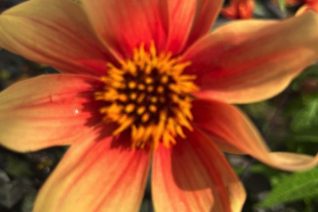
Dahlia ‘Xera’s Moonfire’
This has turned out to be one of our best hardy Dahlias. It was a sport from ‘Moonshine’ which is yellow with a central zone of orange. This delightful flower is brushed with orange through out. Amazing the things that turn up in a nursery over the years. This stunner just appeared virtually out of no where. To 3′ tall in bloom and forming a large clump of dark foliage. Dark leaved Dahlias add a great depth of contrast in a garden. Excellent cut flower. Blooms July-October in full sun and rich soil with regular irrigation through summer. In colder climates the bulb (tuber) can be lifted after the first frost and held in slightly wet shredded paper in a dark space. Re-plant when all danger of frost has passed. Pair with dark purple flowered Salvias and Aster ‘purple dome’. Protect emerging plants from snails/slugs. Not often bothered by deer. In the ground it appreciates very rich soil and regular water in full sun. Add a layer of compost each year and you’ll improve drainage for better winter cold tolerance. Easy perennial.

Dicliptera suberecta
This is the old name for what has become known as Hummingbird Flower. Rounded, pretty soft furry gray/blue foliage supports 2′ stems clad in brilliant tubular orange flowers. They appear non-stop for months. Excellent in seasonal containers or in the ground a spreading perennial for RICH, WELL DRAINED soil in a hot position in full sun. Great occupant of parking strips. To 2′ wide in time. Disappears completely in winter and returns late in spring ( May- be patient ). It likes water and rich soil, the good stuff. Mulch with leaves in fall. Uruguay/Argentina.

Eccremocarpus scaber ‘Orange’
Chilean glory vine comes in a host of flower colors. We’ve endeavored to sell them by that category. This orange variety is both a vivid color and the most common for this short lived vine. To 8′ in a season- or taller this light textured vine attaches itself by tendrils. Provide fine support such as a mesh or small diameter trellis. Bloom is on new growth and continues all season. After flowering chain of swollen seed pods appear- leave some on the plant to ripen as this plant will also self sow and the main plant will live for only 3-5 years so you want a replacement. Loved by pollinators but naturally adapted to hummingbirds. Full sun and rich, well drained soil in a protected location. This is a great vine textured, light vine for fence, even chicken coops. Dies back to the ground in normal to colder than normal winters, returns from the base in spring. Lovely vine. Mulch in autumn to protect the base. Chile

Eccremocarpus scaber ‘Pink’
The bodaciously named Chilean Glory Vine is a great low weight, long and strong blooming perennial vine in our climate. Filligree intricately divided leaves and petioles wind this deciduous vine up to 10′ in a season. Most years it returns to the ground and resprouts in spring and that isn’t a bad thing. It gives you the opportunity to clear away the previous seasons chaff. If we have a mild enough winter it will retain some green but you may still cut it back in early spring. Waves of long stemmed tubular flowers are soft pink with a recurved lip tipped in yellow. Its an exquisite show that goes unabated from late May to September. We’re very attracted to this orchid like coloration of this form and we find it accommodating for mixing colors. It also comes in red, orange, yellow, and cream- in time we will offer those. Hummingbirds LOVE this vine and will immediately show up when flowering commences. Much easier than cleaning and refilling a feeder. Remove spent flowers and that will encourage more flowers. Blooms on new growth. As it grows it blooms. Fantastic on the wall of a chicken coop providing ample shade. Rich soil that drains and regular summer water. Mulch the base- protect the crown in the first winter.

Eriogonum fasciculatum
California Buckwheat is a shrubby perennial that occupies a wide variety of biomes in that state, Needle like leaves on a semi-woody subshrub. This is a common component of chaparral and beginning in late spring and carrying on virtually all summer rounded flat bloom clusters are mainly white but range to pink and even light red. For 2-3 months it is a beacon to pollinators and a prime food source for many butterflies. A very drought adapted plant that once established can thrive on no water at all. Excellent for blasting hot hell strips or large rock gardens. In habitat this subshrub is frequent between Manzanita and Ceanothus. To 2′ x 2′ slightly larger. In our climate this plant can freeze to the ground and return from the base. Best in soil that drains and goes very dry in summer. Fast drainage is important.. In autumn the flower heads remain and take on russet to pink to red tints before the spent flowers fall apart. It creates a lovely tapestry on hillsides throughout California for months. Mix with Yuccas,, Pensetmon, Manzanitas, Bupleurum. Pretty, tough wild plant. Hillsides and Hells trips. Full all day sun in a hot position.

Eryngium proteiflorum MX
This is a spectacular plant and Brandon collected the seed outside of Mexico City- at a very high elevation. Still we are not completely sure of its ultimate hardiness so I’m going to guess. Based on other Mexican and S. American Eryngium and considering this is a widely spread species I’ll say its good in rich amended soil that drains to about 10ºF. That is somewhat irrelevant as the flower on this member of the Apiaceae (Carrot family)is phenomenal. In May-August HUGER 6″ wide flowers with a protruding central cone are metallic silver and sage green Unbelievable. Full sun to light shade in a protected location. Worth protecting in a pot as it makes a stellar container plant. The unearthly flowers are held on vertical stems to 3′-4′. As a cut flower it is a wet dream, lasting weeks and drying too. Kind of prickly a low rosette of serrated evergreen leaves is permanent. Cut away the spent flower stalk when it fades and you tire of it. Light, consistent water. Fantastic. Thank you to our great employee Brandon for capturing the seed.

Escallonia ‘Compact Pink’
Handsome small scale long blooming shrub for protected locations, including front line conditions at the beach. Drought adapted, glossy evergreen that grows slowly. This dwarf variety is conveniently small. Compact and dense growing to only 2′ x 3′ in 7 years. The glossy leaves make a fine backdrop to the clusters of small red/pink flowers that come in abundance in early summer but also sporadically year round. Incredibly drought adapted when established sailing through a whole dry summer without suffering one bit. Avoid exposure to subfreezing wind with this shrub it can burn- but as with all Escallonia recovery is mind bogglingly fast in spring. Loved by hummers and bees and pollinators in general. Very easy to go grow and always looks good. Moderate deer resistance. Chile.

Eschscholzia californica ssp. maritima
Just about every gardener is aware of our west coast native California Poppy. It has a huge range from far southern Washington State to Mexico. There are several subspecies, but this one is exceptional. This PERENNIAL California Poppy is very different than the species. ‘Martima’ or Coastal California Poppy is a low, tidy, mat that erupts in wave after wave of flowers from spring to autumn. The tight congested foliage is handsome blue green and pairs well with the golden flowers that have a central area of orange. This plant is native to sand/very well drained soils and if you replicate that in your garden this is a very long lived plant. It also excels in the very well drained soil of containers and will drape over the edge and follow the contours closely. Ideally this plant is adapted to slopes with just light water during the summer. No need to dead head this plant is naturally remontant- re-blooming without any intervention from the gardener. Loved by all native pollinators and cherished by big black and yellow native bumbles. To 4″ tall as foliage – 8″ in flower its spread on average is about 2′ x 3′ in a year. Detests all shade, do not even try. Eschscholzia californica maritima is native to the northern and central California coast. Avoid compost and enriched soils, average soil is best. Not bothered by deer, rabbits, slugs, snails. So, why isn’t everyone growing this fantastic plant?
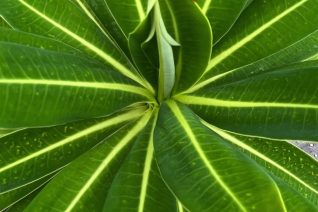
Euphorbia stygiana
A shrubby almost woody Euphorbia with large opulent green leaves and in spring honey scented chartreuse flowers. To 6′ tall and forming a patch as wide. Very lush appearance for a plant that is actually drought adapted when established. This is an incredibly rare plant in its habitat in the Azores. About twenty plants remain in the wild and that is all. A great reason to grow this large plant. Broken leaves emit white sap. Protect from subfreezing wind – a south or west aspect is best in a sheltered position. Grows quickly with light irrigation in soil that is enriched but drains. Established plants require water just once every few weeks, Very pretty under a low window where the honey like fragrance can be enjoyed. Might be deer resistant but protect this lush shrub in the beginning. Blooms late spring and is wonderful with other bold plants for full sun . Pair with our native elk clover (Aralia californica) and hardy banana (Must basjoo). Excellent performance at the Oregon coast and lovely backed by a stone wall. Regrows from the base if established plants freeze back. Be patient, recovers in mid-spring. Wonderful garden plant.

Fuchsia ‘Dancing Stars’
Adorable Fuchsia that is a prolific bloomer. Widely spreading diagonal stems support curtains of pendant small flowers. The sepals and floral tube are white and the corolla is violet purple. Each flower provides its own contrast but in masses they are beautiful. To 2′ x 3′ in a single season in rich, moisture retentive soil with good drainage. Regular summer water. Apply a handful of all organic fertilizer in mid-spring. Dies to the ground in the first hard freeze, resprouts from the base in mid-spring. Great container Fuchsia. Apply a thick mulch of compost for the first autumn and plant deeply for added winter protection.

Fuchsia ‘Galfrey Lye’
Flowers! Flowers! Flowers! This extraordinary hardy garden Fuchsia produces masses upon masses of long tubular flowers. The floral tube and sepals are white and corolla is deep rose with distinct orange tints. To 2.5′ tall and as wide in a single season. Heavy bloom begins almost immediately and continues unabated to frost. Excellent container Fuchsia and in the garden give it rich soil that is moisture retentive but drains. Incorporate plenty of compost into the soil and add a handful of all organic fertilizer at planting. Mulch the first winter and plant deeply to protect the crown. Once established it is reliably hardy. Freezes to the ground below 26ºF. Returns in mid-spring from the base and almost immediately starts blooming. Regular summer water. Full sun to part shade. (Avoid the reflected heat of a wall). Excellent performance on open north exposures where there is bright light but protection from intense heat/sun.

Fuchsia ‘Thomasina’
One of our favorite garden Fuchsias for its unique flower color and prolific blooming habit. Sepals are terra cotta orange with green tips and the corolla is rich auburn red. Very nice. To 14″ x 2′ in a single season. Excellent container Fuchsia where you can match the cool flower colors for a great effect. Part shade to high overhead shade in a cool position. Rich, moisture retentive soil with mulch in fall. Dies to the ground with the first hard freeze and returns quickly from the roots in spring. Plant deeply to ensure greater winter protection for the first season. Fuchsias adore fertilizer- give ‘Thomasina’ a handful of all organic fertilizer in spring. They also respond heartily to liquid fish emulsion. Blooms June to frost.

Gardenia jasminoides ‘Micheal’
A very mysterious Gardenia that I got from the east coast and whose flowers are ENORMOUS and powerfully fragrant. Everything about this hardy Gardenia is big. The leaves are 5″x 3″ and are forest green and delightfully glossy. A moderately fast growing evergreen shrub to 6′ x 6′. Full sun but best in dappled shade in a protected location. Regular, consistent water is crucial. Gardenias like heat and water. Poorly irrigated plants will show yellow leaves on the interior of the plant before wilting. This is especially important since we’ve had consecutive dry springs and most likely you will need to water this plant beginning in April. Rich soil with regular water. Protect from subfreezing wind, and plant in rich soil with ample compost. Apply a handful of all organic fertilizer in early summer. The enormous flowers begin i July and continue to October. The only information I can find on this cold hardy cultivar is that it is particularly resistant to pests. Since Gardenias in our climate aren’t really pest magnets this is moot, but good to know. Spectacular flowers are 5″ across and semi-double. Excellent for corsages and even for floating in a bowl, one flower will perfume a wide area. It is crucially important that this shrub be well established going into winter otherwise its hardiness to cold will be compromised. Limited quantities.
Gevuina avellana
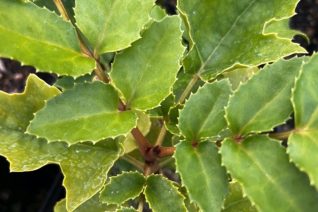
Chilean Hazlenut is not a hazelnut at all its a protea. Glossy pinnate leaves are handsome all the time on this evergreen tree. The huge leaves hug the curly ivory colored flowers that stick out perpendicular to the stems. They are about 3″ long. After fertilization these flowers morph into tasty mellow nut like fruits that resemble red/ochre berries.. They are somewhat like Hazelnuts hence the name. Moderately fast growing to 25′ in our climate. It requires a protected location away from subfreezing wind. Excellent on the Oregon coast. The bark is mellow brown and handsome. It can freeze back substantially at 10ºF but recovery in spring is rapid. This means that this forest tree is almost always a shrub in our climate. Excellent espaliered against a south or west facing wall. Takes some shade but is happier in full sun. Fairly closely related to Macadamias but the nuts aren’t quite as sophisticated. Establish this plant well going into the first winter. Water once a week deeply for the first year. Good container plant that can be moved to a protected location when arctic air threatens. Blooms on wood from the previous season, prune if needed after flowering has ended.Prefers acidic soil and do not fertilize with phosphorous or potassium. Proteaceae. Chile/Peru/Argentina

Grevillea juniperina ‘Molonglo’
Juniper leaved Grevillea that is a low spreading ground cover. Grass green needle like foliage plays host and is often obscured by masses of curly apricot yellow flowers. They peak in late spring but occur almost any time of year. Poor, well drained soil in full sun with no supplemental water ever. To 2′ tall by 6′ wide in 5 years. Supremely adapted to the heat and drought of parking strips. Prickly foliage deters animals- and even people. Incredibly floriferous shrub that gains cold hardiness with establishment. Loved by hummingbirds. Protect from subfreezing wind. No fertilizer. Dense enough growth to smother weeds Best with total neglect. Loved by hummingbirds. Little water when established. Amazing in bloom.

Grevillea juniperina ‘Pink Lady’
A pretty shrub for a protected location. Compact growing evergreen shrub with medium green needle-like foliage. To 2′ x 4′ in 5 years. Nearly year round-but peaking in spring, copious light pink curly flowers are loved by hummers. Protected location in virgin, un-improved soil. Drought adapted when established. Excellent on a hot south facing slope- avoid crowding by other plants or an exposed cold site. Its possible that this is a hybrid and not pure G. juniperina. However, there is so much variability in this species that we are unsure. Extremely drought tolerant but it seems to grow faster and bloom more profusely with light water in summer. This plant is great at the Oregon coast where it is in nearly full bloom year round. It has survived undamaged in my garden for 9 years and has endured temperatures to 10ºF undamaged. It could be much hardier (when established). Limited qualities.

Grevillea juniperina ‘Xera Ember’
Our improved selection of the Juniper Leaved Grevillea with darker orange to near red profuse flowers and a more compact habit. To 2′ x 4′ wide in time the prickly grass green foliage of this spreading evergreen shrub allows the vivid curly deeply colored flowers to shine. Blooms nearly year round with a peak in mid to late spring. Loved by hummingbirds. Completely drought adapted- never needs supplemental water. Poor to average soil that drains but has never been amended or fertilized. Awesome candidate for a hot hillside or a protected hot south facing wall. Spectacular in bloom. Requests neglect- you should oblige. Hardy to around 7ºF. Full sun. High deer resistance.
Xera Plants Introduction.

Grevillea rivularis
Surprisingly cold hardy to a point and is wonderful Grevillea that is threatened in the wild. Crinkly, prickily, finely divided leaves (bipinnapartite) create a haze of a frame to 5′ x 6′ in 6 years. This “cage” of foliage is intermittently decorated with soft purple flowers from spring to early autumn. These are tipped with a bright green style that is released in bloom. The flowers are often described as toothbrush like. Full sun to very light shade in average soil. Light summer water speeds growth but that is the only reason it is necessary. A protected location. Hardy to about 10ºF- and suffering no damage in the wild winter of 2016/17. Protect from subfreezing wind. Easy to grow with neglect and good siting. Same hardiness to cold as ‘Canberra Gem’. Give it room as it will steadily and methodically increase before you know it. Moderate deer resistance. AKA Carrington Falls Grevillea. Avoid fertilizers. If it never bloomed this shrub is fantastic for texture alone. Not for cold gardens- best with some urban protection. Very limited quantities.
Photo credit: Loree Bohl

Grevillea victorae ‘Murray Valley Queen’
A vibrant form of Royal Grevillea that is slightly less hardy to cold than the species and requires a protected spot. Why grow this variety? It blooms, and blooms, and blooms. Rusty orange buds decorate pendant clusters that open to fresh orange. This plant sets tons of buds in summer and then releases them to the public through all the months of winter. Slightly smaller leaves are dusted in brown indumentum when young. To 8′ x 8′ very fast in average, unamended soil where water does not linger. Best in urban gardens with extra heat. It does not abort as many, if any flower buds in the summer drought. Excellent performance at the Oregon coast. Rounded upright and spreading evergreen shrub that remains handsome year round. Prune if needed after the last flush of flowers in spring. Winter flowers are a beacon to Anna’s Hummingbirds. Native to Australia where it was discovered near the Capital of Canberra. Nice cut flower. Water to establish then taper to once a month in summer. In colder gardens locate under the canopy of tall trees or near a warm wall. Full sun to light shade.
Grevillea x Citrus Sparklepie™
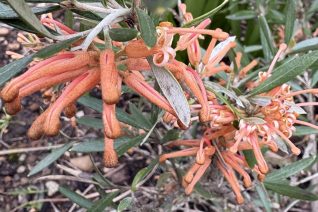
Grevilleas are interesting in that almost all species will cross and you can end up with some really weird results. . In this instance I selected this mounding evergreen shrub for the vividness of its orange flowers and superior cold hardiness from about 50 others. This cross between G. victorae and G. juniperina has thicker leaves than most cultivars (and seedlings) and that translates directly to improved cold hardiness and they end in a sharp tip. This variety has weathered 10ºF so far and could be hardier. Larger, vivid orange flowers with a style stained melon red that quickly matches the orange of the perianth. (Pouch like petals that reflex when open). To 3′ tall x 8′ wide in 5 years. Full sun to very light shade in average to poor soil. Water weekly after planting and then as growth increases limit it to once a month- a deep soak. Blooms almost continually with a crescendo in late winter/early spring. Loved by hummingbirds, European honeybees, and native hover flies. Easy to grow. Mulch after planting. Its important that Grevilleas become well established by their first winter- this immediately increases cold hardiness. Once established its fairly care free except for occasional pruning. Established shrubs can go through summer without any supplemental water. Fun to grow shrub. Excellent at the Oregon coast, tolerates sandy substrates with additional water. Not bothered by deer. Elk? I have no idea- they will at least step on it so protect. Grevilleas all require good air circulation. Avoid plants that flop or lay on them- not only will it block the sun it can even encourage rot. Site your Grevilleas where they are open and the wind can blow them dry.
Xera Plants Introduction
Grevillea x Xera Peach™
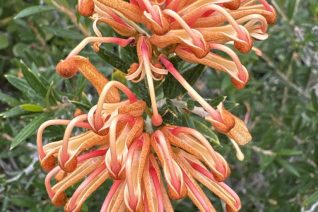
This seedling selection has multi-color peach flowers that are large and handsome small olive green foliage that is not prickly.- This is seed from a hybrid between Grevillea victorae x Grevillea juniperina ‘Gold’. I sowed a bunch of seed and this seedling stands out as superior to the other seedlings and to many other Grevilleas that we grow. This is an upright growing and then spreading evergreen shrub with distinctive small grass green wedge shaped leaves. The flowers are very large for a hybrid and the perianth is a soft citrus pastel orange. The style or pollen presenter begins life after opening with a red/melon color as it ages the style changes to light yellow from the tip down. The base of the style nearest the perianth remains dark melon red. Very heavy blooming selection. Flowers appear January-July and on older plants year round. The large clusters of un opened buds are shaded light pink before maturing. Upright growing then spreading laterally with age. To 4′ tall and 4′ wide. All Grevilleas are a beacon to Hummingbirds and all birds as is this cultivar. Full sun in average, un-amended soil. Dig a very large hole and water weekly until you see good new growth then taper to once a month. I’m very proud to offer this seedling, it is a vast improvement on other Grevilleas with similar size flowers- this one beats them all. Best in a warm, protected location. The smallest of our three hybrids.
Xera Plants Introduction

Grevillea x ‘Canberra Gem’
One of the easiest Grevilleas to grow in our gardens this free flowering hybrid requires a protected location but is surprisingly hardy when well sited. To 4′ x 6′ wide in 5 years, the needle like foliage is bright green and fairly crowded along the stems. Bloom begins in March and extends to July. A small amount of flowers appear year round.- clusters of spidery deep vivid magenta flowers. Very showy. Loved by hummers. Full sun and average to poor well drained soils. Great at the top of a hillside or next to the south wall of a house. No summer water, or compost necessary. You may water it weekly to establish and you can trail off as the plant grows. Native unimproved soils are what it loves. Cold hardy to the low teens. It has recovered from lower and we’ve seen established shrubs in protected places all over western Oregon. Fantastic performance at the Oregon Coast where it should become a staple landscape shrub. High deer resistance- and that includes Elk on the coast. Takes well to pruning after the first flush of bloom has ended. Hybrid between G. rosmarinifolia and G. juniperina. Evergreen. See video clip below.

Grevillea x ‘Constance’
This is an important hybrid that is among the best known in the United States of G. victorae x G. juniperina. A wiry rounded shrub with thin twisted green leaves that are rolled at the margins. Throughout the year a constant procession of orange/red flowers decks the whole frame. Loved by hummingbirds. To 7′ x 7′ in 7 years in average, well drained soil in full sun with little water once established. Not the hardiest Grevillea and has been superseded by cold hardier and superior varieties- such as ‘Neil Bell’. It is, however, an excellent evergreen shrub for the milder coastal regions. In Portland it is relegated to the warmest urban areas in protected locations. Easy fast shrub that you should protect from subfreezing wind inland. There are enormous specimens on the northern Oregon coast that adore that climate and it is naturally adapted to sandy soils. High deer resistance. Loved by hummingbirds. Prune to contain and maintain a compact habit. Hardy to about 13ºF- or slightly less hardy than ‘Canberra Gem’. Very floriferous.

Grevillea x ‘Marshall Olbrich’
Pretty and very large Grevillea that deserves the mildest parts of the garden. Small gray leaves are handsome and a great backdrop to the hot orange pendant clusters of flowers. Blooms year round with an especially large flush in spring. Loved by overwintering Anna’s Hummingbirds. Not the hardiest Grevillea- protect from subfreezing east wind- site on a south or west facing aspect. To 9′ x 9′ fast. Plant in UNAMENDED native soil- avoid compost and fertilizer. Supremely drought adapted. Avoid watering in summer. Excellent performance at the Oregon coast. Our stock plant which has thrived for 15 years in a very cold place is situated on a slope with the overhead protection of Douglas firs. Evergreen. High deer resistance.

Grevillea x gaudichaudii
Impressive ground cover Grevillea that can be difficult to locate. To less than one foot tall it spreads out laterally easily 8′ wide in 7 years. The distinctly oak shaped leaves on this shrub emerge deep red before settling to green. All the while it is producing red upward facing “toothbrush” shaped flowers. These appear from February to August primarily but can pop off occasionally year round. All together it forms an amazing ground cover shrub that features fantastic foliage and flowers in a bold tapestry display. Cold hardy to a bit less than 10ºF- it appreciates successively colder frosts to harden off for its ultimate frost resistance. Full sun to part shade in average, well drained soil. Light summer water increases the growth rate- and it can zoom once established. Avoid crowding from other plants- it seems to require good air circulation. Excellent performance on gravel mulch. Large rock garden plant or hot slope cover. Protect young plants from temperatures below 15ºF- it can burn the foliage. Hardiness increases with establishment. The very short trunk emerging from the ground can be surprisingly stout- several inches in diameter. Cover with frost cloth- held down for wind protection during extreme arctic events. Drought adapted when established. A protected location. One of the coolest shrubs we can grow. A naturally occurring hybrid from the Blue Mountains. Excellent around and over boulders which add radiant heat during extreme cold. Should only be attempted in the mildest gardens.

Halimiocistus x wintonensis
Clever llttle rockrose that deserves a place in a protected, hot, sunny aspect. Sage green dense foliage is a great backdrop to the spectacular 3″ wide cupped flowers. They are white with a zone of maroon at the base around a yellow center. Fun! Blooms daily for 4 weeks in May-June. To 2′ x 2′ quickly in RICH well drained soil in full sun. Light summer water. Great performance in the reflected heat of hellstrips. Beautiful in bloom. Combine with native hardy annuals for a wonderful wildflower spring display. No water necessary. Forms a rounded shape. Best with occasional summer soaks but tolerates drought.. Moderate deer resistance. Very good performance at the Oregon coast.

Halimiocistus x wintonensis ‘Merrist Wood Cream’
For flowers alone this is the most spectacular Rockrose. A cross between Halimium and Cistus produced this remarkable low spreading evergreen shrub to 2′ tall and 3′ wide. In April to June 2″ cream colored single flowers, the base of each petal is a maroon blotch Flowers appear daily for weeks. Attractive felted sage green/gray foliage is handsome even out of bloom. Full sun and well drained ENRICHED soil- these hybrids prefer richer conditions. Little or no water for established plants. Tip prune after flowering to shape. Protected location. Excellent performance in Hell strips. Amazing flowers. Prune very lightly if needed after flowering.

Hebe (Veronica) ‘Pink Paradise’
Excellent symmetrical evergreen foliage on a dense dome shaped shrub. The sea green/blue cupped foliage surrounds deep mahogany stems. To 2′ tall by 3′ wide forming a moderately fast spreading plant. In spring and often again in late summer a parade of sparkling pink flowers. They look wonderful agains the foliage. Easy to grow lovely shrub with a year round handsome interest. Excellent performance at the Oregon coast. Good cold hardiness into the lower teens or lower for brief periods. Light consistent summer water in full sun to very light shade. Protect from subfreezing wind which won’t kill it but can make this Hebe unhappy. Good long term performance in gardens and a welcome flower color in a genus replete with purple, blue, and white. Nice looking shrub at all times. Best in enriched soil. Remove the first round of flowers to better view the second late summer display.

Hebe (Veronica) x ‘Dragon Fly’
This is one of Andy’s selections and its an excellent Hebe. Arching in growth with canoe shaped bright green symmetrical foliage . In June and July the entire top third is clad in blue racemes that are thin and fade a little with age. The flowers arrive in profusion and are loved by bees and butterflies. To 30″ tall and eventually forming a dense dome to 3′ wide. Rich to average soil that drains, ideal on a slope. Avoid areas with direct exposure to subfreezing east wind. In those areas that are prone place it out of the wind- a west or south facing aspect. Great plant for courtayards or containers. Blooms are effective for a month or more, then its just a bright green dense evergreen shrub. Excellent performance at the Oregon coast. Light consistent summer irrigation. Mulch after planting. Moderately fast growing.
Xera Plants Introduction

Heliohebe ‘Hagley Park’
The world of Hebes is big, and they are almost all (99%) from New Zealand and the Southern Hemisphere. This is a close Hebe relative but it excels at its floral display more than symmetrical foliage. To 2′ tall this is light airy evergreen with grass green foliage lined in maroon. In late spring to summer branches extend above the plant and yield airy dark purple buds that open to light lavender- these panicles are up to 1′ long. Its an outstanding showy affect that is adored by pollinators. Full sun and rich to average soil with regular irrigation. Best in a spot protected from sub-freezing east wind. A western or southern exposure. Very easy to grow evergreen shrublet that finds a home in shrub borders, perennial borders, even gravel gardens. The airy flowers work great as cuts they will last at least a week. I leave the flowers on mine to bring joy to our big black and yellow fluffy bumble bees that seem to hone in on this plant. Mulch in autumn. Blooms April to June. Very fun to grow. Prune lightly after bloom has ended to increase blooming stems and density.

Heteromeles arbutifolia
Toyon. One of the most widespread shrubs in California this plant also known as Christmas berry ranges right up to the Oregon State line and appears just inside our border. Large evergreen shrub with finely serrated large green leaves. In late spring flat clusters of white flowers appear- they are pretty but nothing compared to the brilliant red berries that follow and ripen in early autumn- remaining showy through winter. Most often they are eaten by birds. AKA Hollywood this shrub is where that city got its name. heh. Fast growing to 13′ tall by 10′ wide in 10 years in our climate if left strictly unpruned. Slightly tender it requires a protected location. Most large established specimens I’ve seen around Portland are placed on the west or south side of large trees. They get the protection of the overstory and it shields them from the coldest winds. No water or regular water- either way, very adaptable shrub that really likes cultivation. Small tree in time. West coast native evergreen shrub for the mildest gardens. Oregon native plant.

Leptospermum cunninghamii ‘Silver Form’
Beautiful species of tea tree with tiny leaves of pure silver. Its been grown for eons in England- native to higher elevations in the Great Dividing Range. Great fine textured shrub for a dry and protected area. To 6′ x 5′ in 5 years one of the most silver evergreen shrubs in our climate. Blooms prolifically in June covering the whole shrub in white stars. Easy to grow in full sun and average, well drained soil. Light, consistent summer water. Will often have random flowers year round as well. Fast growing. Avoid the coldest sites- best in warm, sunny, gardens. Mix with other shrubs- especially yellow or chartreuse foliage which really makes this shrub pop. Listed as tender in some fairly famous publications…which don’t know what they are talking about. We’ve had this shrub planted at our very cold nursery in Wilsonville for more than 15 years….and there it still happily thrives. Moderate deer resistance.

Leptospermum scoparium ‘Washington Park’
Manuka. This is a wonderful very upright wispy evergreen shrub with tiny leaves that turn maroon in winter and masses of white flowers in early summer. Flowers are born on wood from the previous season and are much larger than the foliage. The effect in early summer is a shrub clad in snow. To 8′ tall x 4′ wide in 5 years. Full sun and a protected position, such as against a south facing wall. This form is from the Washington Park Arboretum in Seattle where it has thrived for many years. A selection made from high elevation inland New Zealand. Grows very fast w/ light summer water. Excellent fine textured plant. Moderate deer resistance. Cold hardy to a little below 10ºF- it has been damaged but recovered from lower temperatures. Very easy to grow wild looking plant. Drought adapted when established.

Libertia ixoides
Spikey evergreen Iris relative that forms substantial clumps quickly. This species has leaf blades in a fashionable taupe. To 14″ tall and eventually getting wider. In summer three petalled pure white flowers appear on panicles within the foliage. These are followed by small showy yellow berries. Full sun and rich, well drained soil with regular summer water. Sharp drainage is important for cold hardiness. Put this on a hillside or in a gravel bed. Water faithfully to establish. AKA White flag. Native to New Zealand. Great in containers. Excellent performance at the Oregon coast.
Mandevilla laxa
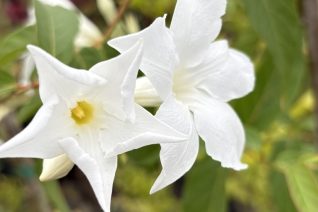
Chilean Jasmine is not common in our region but it has been grown for many decades and it does well in warmer gardens, protected places. Large entire deep green leaves are 3″ long and opposite on twining stems. This strongly growing vine requires heavy and reliable support (See #4 copper wire). Blooms on new growth, which is continuous, In rich soil it can achieve 15′ in a season. The 2″ long tubular white flowers have the familiar propeller petal configuration of this family the Apocynaceae . The fragrance to me is delicious on warm days and nights and close to the blossoms which appear in clusters. It is not a sweetly cloying scent but more sophisticated. I once had this vine around my front door. In full bloom on warm summer nights it would be a cloud of perfume. Deciduous and often freezes back either 1/2- 3/4 of the way in colder than normal winters. In horrendous winters (below 12ºF) it can freeze away. Choose a protected site in full sun with rich soil and ample water. The more verdant the growth the more profuse the display and fragrance. Blooms late May- October. Avoid, cold frosty sites, cold gardens. In rural areas place it against south facing wall. Because it blooms on new wood and grows so prolifically it may be cut nearly to the ground for a fresh start to the year- do this in late March. In most summers large two chamber connected bean pods are 8″ long and bright green. When they ripen to tan they will twist and release downy clad black seeds that sail on the wind. Several winters in a row and the seeds that germinate may survive. I almost always lose them but the climate is changing and don’t bet on self sowing any way -its rare Root hardy to about 5ºF- mulch for added protection. Exquisite vine. Native to central southern Chile.
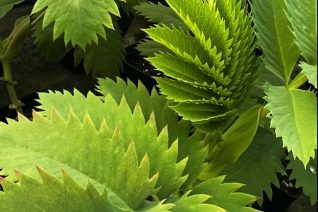
Melianthus major
South African Honey Bush that we grow from seed. This bold sub-shrub/perennial entrances people with the large blue symmetrical, pinnate, serrated leaves. Large plant to 6′ x 6′ in 5 years. Semi-evergreen it can freeze to the ground below about 20ºF and will vigorously regrow from the base in spring. Its important that Melianthus be very well established the first season going into its first winter. A large root mass ensures re-sprouting from the coldest winters. If the winter is mild 1′ tall inflorescences of black and red are odd, spectacular, and an ode to goth gardening in early summer. Rich soil that is never boggy in a warm, protected location with regular water to establish. Even if winter is only semi-cruel and the stems stand but with tattered leaves the whole plant can be cut to the ground AFTER ALL THREAT OF FROST HAS PASSED. Mulch for the first autumn w/ dry leaves and compost. Excellent at the base of a warm wall or a south facing aspect. Appreciates good care and water.. Mix with other large, bold perennials- Aralia californica (Elk clover) and Lobelia tupa (Devil’s tobacco) . Very dramatic in containers. Container grown plants should be protected from arctic cold (below 20ºF). The large leaves have the odor of peanut butter when disturbed/bruised. Its pungent and spot on. Not often bothered by deer. Might be somewhat rabbit resistant. Nice bold, tropical affect.We offer two other named cultivars, to be honest any one of these seedlings could be as good or exceed those cultivars.

Melianthus major ‘Antonow’s Blue’
Big and bold and blue this remarkable plant known for its enormous pinnate foliage makes a statement. To 7′ tall and as wide in time. Following mild years madder red rubbery flower spikes bear black flowers. yep. Its very important to establish your Melianthus happily before its first winter. That means you give it rich, well drained soil in full sun with REGULAR summer water. The bigger the root system the more vigorous the plant will return if frozen to the ground (below 20ºF). Luckily in the city this usually happens every four years or so. In colder outlying areas plant it next to a hot south facing wall and nurture the hell out of it. Mulch before arctic episodes is a good thing. Moderate deer resistance. South Africa.

Melianthus major ‘Purple Haze’
Nice selection of Honey Bush that shares tints of purple predominantly when new leaves are unfurling. The enormous blue/lavender serrated leaves are amazing. Lower growing than either the species or ‘Antonow’s Blue’. To 4′ tall (usually shorter) by at least 6′ wide. Red flowers are produced on the black scape that can follow mild winters. Technically a subshrub as it can freeze to the ground and fully recover from the root in a single season. IF it has been well established in its first season. For that reason we only sell Melianthus in 2 gallon sizes. A larger plant establishes faster and has more mass going into winter. Plant in a protected location- against a wall or with light overstory protection. Mulch for the first winter. Freezes to the ground at prolonged temperatures below about 20ºF. Re-sprouts in mid-late spring. Water and fertilize to speed the recovery. South Africa.
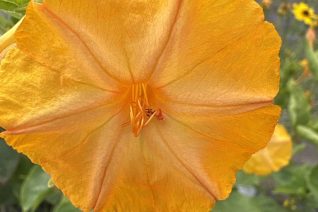
Mirabilis jalapa ‘Orange Flowered Form’
Four O’ clocks are a tried and true favorite summer blooming perennial. AKA the Marvel of Peru opens its sweetly scented flowers around that time. Forms a bushy plant 30″ x 30″ and it comes in a host of flower colors but pure orange- and not salmon is a new hue. Heavy blooming perennial, forms a tuber, same treat meant and hardiness as a Dahlia. Mulch in fall if you live in a cold area and be patient for it to return in May . Wonderful sweet flowers perfume the evening air. Loved by butterflies, bees and moths. Will often re-sow if the winter has been mild above 20ºF. Root hardy to about 10ºF and often persisting forever in the very close area near old house foindations . Rich soil in full sun with regular summer water for best growth and bloom but remarkably drought adapted when established Under ground tubers become the size of a small potato. Blooms last a day but the procession of flower goes from June to October. Great container plant as well.

Myrtus communis ‘Emerald Compact’
This is a seedling myrtle that showed up in our nursery. I moved it to a stock bed and observed it for several years. Its proven to be hardy to lower than 15ºF and its a dense and compact growing form. Good looking evergreen that has deep forest green foliage with a slight gloss. Dense growth forms a shrub to 3′ x 3′ in 6 years- progressively larger after that. In late summer to early autumn a procession of pure white flowers with a central boss of exerted stamens. This aromatic shrub is adapted to hot dry conditions and light to little water once established. In fact, the more lean the conditions the hardier this myrtle will be to cold. Black elongated drupes follow the flowers. Formal appearance that can be even more formal with pruning. Though, its naturally dense habit makes pruning less likely. Great against baking hot south facing walls. Loves the zone of south facing planters that are asphalt on one side and a hot wall on the other. Best as a specimen- not a hedge as it can be prone to damage in severe winters ( below 10ºF) which recovers quickly in spring but makes it less useful as a hedge. Great container subject. Moderate deer resistance. Tolerates VERY dry summer conditions. Full sun to quite a bit of shade at the expense of a dense habit. Very durable urban shrub. Protected location. Locate out of the path of subfreezing east wind.
Xera Plants Intoduction

Myrtus communis compacta ‘variegata’
We love Myrtles they are so drought tolerant and smell so good and we’re finding more and more cultivars that are hardy in Portland. This one is a real surprise because the green form of ‘Compacta’ is not nearly as hardy as this charming variegated version. A slow growing perfectly round shrub with light green leaves edged in cream- brush them- they smell so good. To 3′ x 3′ in 8 years. In summer small white flowers have a sexy little brush of white stamens. CUTE. Full sun to very light shade in a warm protected position. Mine are against my house on the south side and they’ve grown into a little hedge. They have only had slight tip damage in the coldest winters, but spring recovery is rapid. In fact it can freeze to the ground and resprout and regain its stature in a season. Don’t go planting this shrub out in the open, exposed to wind. It will fry. Instead keep it close and it will be fine. Extremely drought tolerant.
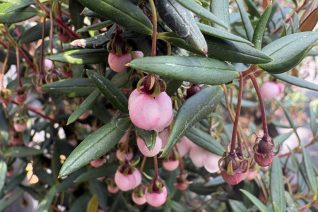
Strawberry guava as it is sometimes known is a sweet, slightly tender evergreen shrub with tasty edible berries. Compact growing myrtle with aromatic foliage. This resident of Chile/Argentina has been grown for hundreds of years in Europe and also the US. The fruits are about the size of a dime and have a sweet menthol -strawberry taste. Pendant pink/white flowers are born at the end of long stems. The evergreen foliage is small and matte, not shiny like most myrtles. 150 years ago this plant was a favorite fruit of Queen Victoria of England. To 6′ tall by 3′ wide in 10 years. Excellent container subject that you should protect if temperatures drop below 20F. In the ground choose a protected site, against a south or west facing aspect. Cover with cardboard box to shield from winds and temps below 20F. In extreme winters it can freeze to the ground below 10F but recovery from the roots is swift and it will regain stature quickly. Flowers/fruit are born on new wood, prune if needed when blooming has ended. Scale and culture as lends this shrub to topiary and also espalier which will aid in winter protection, Closely related to real Guavas. The fruit that ripens in late summer are worth it. Moderate deer resistance. Regular irrigation. Adorable shrub all around. Long season of interest, it is in bloom for an extended period 6 -8 weeks in mid-late spring and the dainty fruit take several months to form and ripen- normally by late summer and early autumn. Excellent performance at the Oregon coast.

Nerium oleander ‘Hardy Pink’
This is a relatively hardy selection of Oleander with profuse pale pink flowers at the end of summer. Not quite as cold hardy as ‘Hardy Red’- ‘Hardy Pink’ will show foliage damage at about 16ºF. Therefore, it should be placed in the most protected sites as possible. A south or west facing wall is ideal. Not recommended for gardens outside of the urban heat island – the city of Portland. To 5′ x 5′ and recovering quickly in spring if frozen over winter. Blooms from deep pink buds open to paler pink in August to September. High deer resistance. Thrives in the hottest sites possible. The more established the shrub the cold hardier it will be

Nerium oleander ‘Hardy Red’
Surprisingly hardy Oleander that is perfectly at home in warmer gardens. Upright then arching evergreen shrub to 5′ x 5′ in 6 years. In June to September a continuous supply of trusses of bright cherry red (hot pink) flowers. Very showy and welcome in summer. Foliage is hardy to approximately 12ºF and will be damaged below that. Recovery is very rapid and bloom will still commence. Prune before flowering if needed. Full, HOT sun in a protected location. Best against a south or west facing wall- out of subfreezing east wind. Light summer water when established. As our experiments have revealed this is a showy, hardy shrub. The hardiest Oleander we’ve grown and the best flowering. Toxic. Not bothered by deer or rabbits. Very showy in bloom. Thrives in the hottest locations – no problem.

Nerium oleander ‘Mathilde Ferrier’
Who would have guessed that one of the hardiest Oleanders would be a double flowering light yellow? Not me, but here she is and yes she is hardy in the city of Portland. Tall growing vigorous evergreen shrub to 8′ x 4′ in 5 years. In summer clusters of FRAGRANT double soft yellow flowers are profuse and sincerely beautiful. It blooms off and on until September. Full hot sun in a protected location- against a south or west facing wall is ideal. Injured by cold at about 13ºF and below but it recovers remarkably fast in spring when truly warm weather arrives and it will still bloom (blooms on new wood). It really is a pretty flowering shrub for a protected spot. The more heat it gets in summer the hardier to cold in the winter. Makes sense.

Passaflora x ‘Betty Myles Young’
Stellar passion vine with distinctly purple tepals and deep black to blue on the interior of the flower. Vigorous vine for a protected location in full sun. To 12′ in a season and blooming continuously from June to October. Attaches itself by winding tendrils. The flowers appear on new wood, as the vine grows it produces new flowers. Average to rich soil with REGULAR irrigation during the first season and then occasionally. Passafloras must be well established going into their first winter. In half of the winters (below 20ºF) it can freeze to the ground. It will then rapidly break from the base when truly warm weather arrives. Mulch heavily the first winter, Place on a trellis against warm, sunny wall for the best performance. The intricate and beautiful flowers are about 4″ across. Sometimes sets inedible fruit. Passion vines are loved by everybody but especially children. The toy-like flowers enchant. Sweetly fragrant flowers up close. Loved by hummingbirds. One of the best hybrid Pnassafloras for our gardens. Moderate deer resistance

Passiflora x ‘Star of Surbiton’
We’ve tried a lot of Passion Vines and to be honest the majority of hardy varieties are just basically a variation on that old house eating vine ‘Blue Crown Passion’ Vine (Passaflora caeulea). This guy is a surprise though. While it can freeze to the ground below about 20ºF it is evergreen in the majority of normal winters and its an early and heavy blooming vine- that is pretty as well. The white sepals surround a row of light purple filaments. Very delicate and intricate flower that we adore. Plant in a hot sunny aspect with support for its little tough twiners to adhere. And they will as the whole plant rises to 12′ tall in a single season. Blooms on new growth- as its growing it is constantly blooming. Loved my hummers, butterflies, pollinators in general. Mulch the base going into the first winter. Once it is established no arctic blast will affect the roots. Fast re-growth in in spring. Rich, well drained soil with regular summer water to speed growth. Flowers are approximately 4″ wide and very showy. Not a vine for cool shady gardens or arctic cold spaces.

Pellaea rotundifolia
Button fern from New Zealand is a very pretty, symmetrical evergreen fern for the most protected sites. Forms an arching rosette of round leaves lining wiry stems. New growth is ochre changing to dark green. To 9″ tall and about 1′ wide in time. Part shade to shade in rich well drained soil with regular summer moisture. Protect from subfreezing wind by placing it under the branches of taller shrubs or near a north facing wall. Excellent houseplant. Slow to increase in size- be patient. Cover with remay or leaves if temperatures threaten to drop below 20ºF. Great performance at the Oregon Coast. Moderately deer resistant.

Phormium cookianum
Aka Phormium colensoi, Mountain Flax has a different habit than the more commonly seen and very upright Phormium tenax. This large clump forming plant has wide and DROOPING sea green foliage. It rises to about 4′ tall but spreads at least 7′ in time. Evergreen perennial for borders, containers, This inland species is said to be hardier to cold than P. tenax or its hybrids.. So far we have not observed that. It seems to be the same hardiness about 12ºF but will regrow if frozen to the ground. Rich, well drained, moisture retentive soil is ideal with regular summer irrigation- which spurs establishment and luster. Following mild winters (above 20ºF) 8′ spikes deliver yellow duck beak flowers on a stately and angular inflorescence. If frozen back by temperatures below 17ºF established plants are capable of recovering quickly and entirely by early summer. Excellent performance at the Oregon Coast where it tolerates gale force salty winds and will never be injured by severe cold. Give it a protected spot in the Willamette Valley and shield it from subfreezing wind during arctic events. Very pretty evergreen perennial. High deer resistance. New Zealand mountains. Picture taken on the Oregon Coast.

Phormium tenax ‘Atropurpureum’
The most commonly seen New Zealand Flax in our climate and arguably one of the most hardy to cold. Deep maroon/purple evergreen foliage in a large clump to 5′ x 5′ ultimately in a hot position and full sun in rich, well drained soil. Regular summer water increases the growth rate which in turn establishes the plant more thoroughly. The more established the Flax the more vigorously it returns if it gets hit by cold. If it does, try not to cut the whole thing to the ground but leave as many viable leaves as possible for food to aid in the recovery. Great plant for hot hellstrips and containers. Borders. etc. Following mild winters (above 20ºF) it may send up 6′ spikes with duckbill shaped yellow flowers in summer. Thrives at the Oregon Coast where it seldom is ever bothered by cold and where it absorbs blasting salt laden winds happily. High deer resistance.

Phormium tenax ‘Portland Night’
We selected this incredibly dark foliaged New Zealand Flax from a huge seed batch. It was the darkest maroon/black and exhibited great vigor. To 3′ x 3′ in rich, well drained soil with light but consistent summer moisture. Soak once every two weeks once established. Full sun to light shade in a somewhat protected location. When established it is capable of freezing back in extreme winters and recovering fully by early summer. Following mild winters (above 20ºF) 6′ spikes may appear with tubular yellow flowers on a much branched inflorescence. If in containers move to a freeze free location in the event of an arctic blast (about once every four years). Arching stems are graceful. High deer resistance. Great performance on the Oregon Coast. Evergreen.
Xera Plants Introduction.

Pittosporum tenuifolium ‘Emerald Sentry’
We selected this form of New Zealand Pittosporum because its been cold hardy in Portland for the past 15 years! Not bad- for a species that can range to tender- those are great odds. Upright growing evergreen with deep green very glossy foliage with wavy edges. Black stems support the leaves and provide elegant contrast. In mid-spring small but profuse jet black flowers appear on the stems from the previous years growth. Prune, if needed AFTER spring bloom has ended. To 5′ tall and 3′ wide in 7 years. Full sun to part shade in a protected location. We selected this form after enduring temperatures below 10ºF with no damage. Slow growing shrub with great drought tolerance. Always fresh and good looking. Light water speeds growth in summer. Avoid full exposure to subfreezing east wind. Best on a west or south facing aspect. Nice as formal sentries to a sunny entrance. Great urban performance. Fantastic performance at the Oregon Coast.
Xera Plants Introduction.

Pittosporum tenuifolium ‘Marjory Channon’
Surprisingly hardy and spectacular variegated evergreen shrub for protected locations. Each sage green glossy leaf is margined in white and held on contrasting black stems. Very very pretty shrub to 5′ x 4′ in 7 years. In spring small jet black flowers emerge from the leaf axils. Best surrounded by other evergreen shrubs against a wall or with light overhead protection. This cultivar has come through low’s below 10ºF with only light tip damage and recovery was complete in spring. Slightly tender when a young plant it gains cold hardiness with establishment. Takes pruning very well which will increase the plants density. Great in containers that you protect from lows below about 18ºF. Excellent performance at the Oregon Coast. Do not plant this in a location exposed to strong subfreezing east wind- keep it close with friends. New Zealand. Extremely drought tolerant in full sun to part shade.

Pittosporum tenuifolium ‘Variegatum’
One of the cold hardiest selections of this species native to New Zealand. This stunning evergreen shrub of unknown origin shines in the garden with round leaves edged in white with an interior of soft green. And these bright leaves are held on dramatic black stems. In spring small black to maroon flowers decorate the leaf axils. Moderately fast growing pyramidal shrub to 8′ tall x 4 wide in 7 years- and gradually larger. In winter the leaves become even more colorful taking on bright pink tints. Requires a somewhat protected location- avoid exposure to subfreezing winds directly. Best sited with protection from east winds. Full sun to high over head shade. Accepts regular summer water which will increase the rate of growth- but established plants are remarkably summer drought tolerant. Excellent cut foliage for arrangements. A luminous shrub that virtually glows in the landscape. Cold damage begins at about 10ºF- but spring recovery is rapid. Limited quantities.
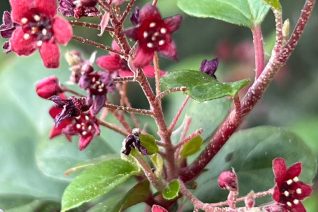
Ribes viburnifolium
Catalina perfume is the common name for this lovely, tough evergreen currant from Southern California. The round evergreen leaves which do remind one of a Viburnum are resinous and spicily fragrant, especially on warm days. To 3′ tall and spreading about 6′ -this low shrub is best adapted to part shade and little to no summer water. It is incredibly drought adapted. In late winter to mid spring panicle of rose red flowers are light and airy- followed by green fruit. This is an ideal groundcover shrub under native Oaks. It also makes an almost formal ground cover in landscapes . Found specifically on Santa Catalina in the Channel Islands off of southern CA. There it grows with other Channel island endemics. Tolerates full sun in our climate but its home is beneath the canopy. Water for the first year to establish then none in subsequent years. Not bothered by deer- unsure of rabbits. Prune it if needed after blooming. Blooms on wood from the previous year. Excellent combined with Vancouveria chrysantha and Camas liechtlinii. for a culture and climate adapted grouping. Grows very fast when happy.

Salvia spathacea
Hummingbird Salvia is a Californian Sage. In rich soil it spreads liberally by underground runners to colonize large areas. That is if winter does not knock it back. Large quilted soft green arrow shaped leaves appear in early spring, by late spring 28″ tall chalice’s of rich red/pink (Raspberry) flowers erupt from dramatic and well spaced whorls. Rich to average soil that drains well. Water well in the first season to establish then very light to none in subsequent years. A Salvia of southern and central California it has a distinctive aroma that is loved by some, despised by others. Mulch with dry leaves for the first winter or two. Doesn’t like wet plus subfreezing cold. Good, and restrained in a container. Protect containerized plants from extreme cold (below 20ºF). Nice and very dramatic cut flowers. Blooms March repeatedly until June. Great for hummingbirds, butterflies, and pollinators. Semi-deciduous in winter.
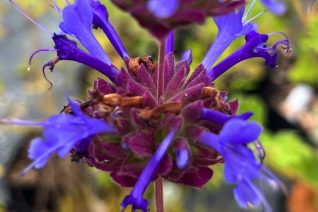
A hybrid between two southern California shrubby Salvias has yielded an amazing plant for our gardens. The parents of this hybrid are S. clevelandii ‘Alpine’ x S. pachyphylla and it continues the amazing foliage fragrance of Salvia clevelandii and the deep blue flowers in purple bracts echo pachyphylla. A shrub/ sub shrub for the very warmest parts of the garden. Against a south or west facing aspect. This Salvias parents come from poor, mineral soils and eventually the pale blue foliage builds to a 30″ x 4′ evergreen shrub. It loses some leaves in harsh winters . In mid to late summer upright stems support whorls that emit striking long deep blue flowers, these are held in a dark purple calyx – the each whorl is dark purple and showy before and after bloom as well. Takes the hottest locations and appreciates it. Strategically placed among large boulder that radiate heat is also useful as is in Hell strips where heat builds. The stems elongate in bloom up to 2′ and are lined with mutiple whorls. Perhaps no animal loves this sage or Salvias in general more than hummingbirds. And the radiant blue tubular flowers are perched just for them. Long blooming aromatic drought adapted sub-shrub. Good drainage, full sun, and regular water to establish, let it dry between watering during summer. Mix with Manzanita, Epilobium – Zauschneria, Grevilleas. Do not cut back until new growth begins in mid spring. Beautiful in bloom. Excellent with a gravel mulch and on south facing slopes. Protect from prolonged temperatures below 15ºF, cover with a cardboard box or a tarpaulin. Naturally drought adapted.

Salvia x ‘Christine Yeo’
Very good Salvia that blooms non-stop medium purple flowers for months in summer well into autumn. Tall growing to 3′ and somewhat wispy. A possible hybrid with the blue flowered Salvia chamaedryoides. Hummingbirds love this free blooming hardy perennial. Freezes to the ground below the mid 20’s. Returns from the base in spring. Rich, WELL DRAINED soil in full sun. Drainage in winter is the key. Add some pumice and gravel to the planting hole and water consistently to this plant good and established. Do not cut back in the spring until you actually see new growth pushing. Then remove all the dead material. Regains stature quickly in spring.

Salvia x jamensis ‘California Sunset’
These hybrids come in such wonderful colors. This dashing Sage displays light orange flowers on tall stems from spring well into autumn. Forms a semi-woody shrub and relishes good drainage and hot locations. Great seasonal container plant as well. Best way to grow this Salvia is to double dig the soil to incorporate oxygen and then berm it up a bit. Plant and water faithfully all summer to spur bloom as well as increase the plants mass and establishment. This will ensure a sturdy plant going into winter. I wait to prune it back in spring until all danger of frost has past. In these conditions it will endure our coldest winters with no problem. Hell strip loving plant to 30″ x 30″. Hummingbird plant. Long blooming. Light deer resistance.
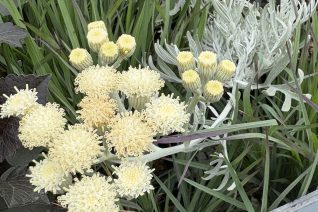
Senecio vira vira
This is a fantastic perennial for soft white/gray foliage and soft cream ray flowers. Wonderful in container plantings this tough plant can squeeze into the tightest places. To 2′ tall x 2′ tall in a season. The bold houndstooth foliage shines with bright or more pastel flowers. Hardy to about 10ºF it is winter deciduous most winters and you can lose it in our hardest winters. Add a little mulch in the autumn to establish and then its fine in subsequent years. Mixes exceptionally well with dark leaved Dahlias or the more pastel flowered Cuphea c. ‘Subhirtella’. Rich soil with light consistent irrigation in full sun. The petal free flowers are a nice cream color (as opposed to yellow) and marry’s the foliage for a continuous look. Native to the Canary Islands.

Sphaeralcea ‘Hot Pink’
Globe Mallow. Fun and easy to grow perennial that behaves like a sub-shrub. Semi woody wands of very silvery small maple shaped leaves wave to 3′ tall. Lining these silver stems are bowl shaped hot pink flowers. They begin as early as late May and continue unabated for months. As time goes on this perennial for dry, hot locations with good drainage becomes a showy hot pink mass of blooms. Excellent on hot slopes with light but consistent summer water. Very drought adapted but light water appears to improve the performance. Loved by bees, butterflies and other pollinators. By autumn this 3′ x 3′ shrub should be left intact to over winter. In spring when new growth is breaking from the base it may be cut back hard and recovery to bloom is rapid with the onset of warmer weather. Cold hardier if given very good drainage. As far as I can surmise it will take temperatures down to about 10ºF. A selection or possible hybrid from two southwestern globe mallows.

Teucridium parviflorum
A stylish shrub/subshrub that is native to the drier parts of New Zealand, and offers great fine texture. The stems which are the only thing that differentiates this from the genus Coprosma- they are square. are golden orange woody stems that rise up to about 4′ tall by 3′ wide. Tiny round green leaves decorate these stems and in late spring and early summer small white flowers appear in the leaf axils. This plant can quickly return from the roots if chopped back severely or frozen to the ground. Established plants can regain their stature in several months. Average to enriched soil that is never boggy in summer. The fine foliage common adaptation in New Zealand, most likely the fine texture of the shrub was to foil grazing giant moa birds and other predators. Very good in containers ( it will be less hardy in a container as with everything) and it can be crowded heavily and still thrive. In the ground give it enriched soil and regular summer water for its first season. Let it grow as much as possible and develop a resilient root system- in the case of an arctic event it will be well prepared to regrow.. Mulch in fall for the first year. The luminous stems and see through appearance make it combine well with bolder textured plants. Regiar water in summer speeds growth and establishment the first year, in subsequent years it only requires irrigation once every two weeks. Freezes the ground at about 20ºF, returns quickly in spring when the soil warms. Not bothered by deer, not sure about rabbits. Excellent architectural plant. We took a break from growing this plant for years, we’re happy that its back.

Teucrium fruticans
Silver Germander is a wiry shrub with gray foliage and even lighter gray/white stems. All summer it bears pale blue small flowers with a prominent central lip. Traditionally used in topiary or as a trimmed hedge, it takes amazingly well to heavy shearing. It responds by becoming incredibly dense. Its malleability leads people to also trim it into any whimsical shape they can dream of. Full sun, average, well drained soil. Little to light summer water when established. Requires full sun and a hot position with protection from subfreezing wind. Classic mediterranean shrub. Grows as well at the cool coast as it does in the hot inland areas. To 4′ x 4′ if left unpruned.

Trachelium caeruleum
Flossflower- this short lived perennial is a wonderful long blooming plant. Umbels of blue flowers rise to 20″ tall. Remove the first set of blooms and it will sprout vigorously from the sides, rows of flowers. Loved by butterflies and pollinators in general. This Mediterranean native has been raised as a cut flower forever, blooming continues to October if you remove spent flowers. They last in a vase for a week or more and deliver a light, sweet fragrance. Freezes to the ground below 20ºF, and is root hardy to about 10ºF. Typical lifespan for an individual plant is 3-5 years but it almost always guarantees seedlings which will sprout in adventitious places. Full sun to very light shade and rich soil with light consistent summer water. It may go very dry and recover from a deep soak. Very easy to grow plant for spectacular effects. Perennials borders, cutting gardens. Hummingbird manna. Forms arching clumps. A distant relative of Campanulas. Rich soil and regular water guarantees a much larger, bloomier plant that will have a longer lifespan.

Trachelium caeruleum ‘Dark Purple’
Florists variety of Flossflower that we think makes a nifty garden plant too. Large rich violet umbels repeat through summer. Remove spent flowers to encourage more. Full sun and rich, well drained soil. Lightly fragrant and a stupendous cut flower. To 30″ tall and 20″ wide. Deep green foliage and black stems are handsome. Short lived perennial- approximately 3-4 years per plant. Freezes to the ground below 20ºF- resprouts from the base if temperatures never drop below about 10ºF. Often self sows in open disturbed sites- even following hellacious winters that compromise the parent plant. Best in rich, soil that drains, double dig the soil to incorporate oxygen into the root zone and allow water to penetrate deeply. Light summer water- extends bloom. If you cut the main bloom on each stem- and it will last for 10+ days in a vase, the sides of the plant will erupt in further bloom and continue to autumn. Loved by butterflies who find an accommodating landing pad and copious amounts of nectar filled flowers. Iberian peninsula and Mediterranean.

Trachelospermum jasminoides ‘Pink Showers’
Exciting color variant of star jasmine. Soft pink propeller shaped flowers yield the same sweet perfume. Blooms June-August and prefers part shade and protection from hot sun. The intensity of pink in the flowers is more pronounced in cooler conditions. Strongly twining evergreen vine with deep green, glossy, undulate (wavy) leaves which are handsome year round. To 10′ tall and 4′ wide in 5 years. Good cold hardiness. Provide strong support. Water heavily after planting and for the first summer. This will speed both establishment and growth and lengthen the bloom season. If it never bloomed (and the flowers are beautiful and fragrant) it would be a top notch evergreen vine on those merits. Excellent recent introduction. See video below (img 6053). Just below the main picture. A really great vine.

Trachelospermum jasminoides ‘Variegatum’
Nice form of star jasmine with large sage green leaves edged in cream. New growth emerges a very pretty pink. From June to August a continuous supply of clusters of sweetly fragrant ivory flowers. To 12′ tall and twining. Provide sturdy support. A nice attribute of Star Jasmines is their habit of keeping their foliage densely to the ground- never any bare knees. Takes full sun to quite a bit of shade- and still blooms. Slightly more tender than the species it requires a protected location- against a wall is ideal. Regular summer water speeds growth and this intensifies the re-blooming. Evergreen. Moderate deer resistance.

Tulbaghia natalensis
Cute little perennial Society garlic with wonderfully sweet fragrant flowers, Best described as intense violets. To 10″ tall and forming expanding but diminutive clumps that are deciduous in hard freezes. Blooms May-August. Excellent for warm rock gardens or containers. Protect containers from temperatures below 20ºF. In the ground it has survived slightly below 10ºF in rich, well drained soil and full sun. Best in a warm position where you can catch a whiff of the wonderful soft lilac colored flowers. Wonderful and sweet cut flower. The foliage on this species lacks the pungency of the more common T. violacea. Moderate deer resistance. Light, consistent summer water. Mulch with leaves if extreme cold threatens. South Africa.

Watsonia latifolia
A very large flowered Watsonia and one of the hardiest of the genus. Wide green spikey leaves rise to 2′ tall in spring. In late spring to early summer 5′ tall spikes of tubular red opening to orange flowers line the stems. Loved by hummingbirds and cut flower aficionados alike. Rich soil in full sun in a protected position- a south or west facing wall is ideal. Freezes to the ground below 20ºF- re-sprouts in spring. Forms an expanding clump to several feet across. A fun genus to experiment with in our climate. Rated as zone 7 in its native high elevation South Africa. We think its more like 10ºF in our climate. Plant with royal red Lobelia tupa and Rosa ‘Bengal Fire’ for a red extravaganza. Excellent performance at the Oregon Coast. Somewhat deer resistant. Mulch for the first few years. Nearly evergreen for the first several years. Established clumps can go dormant with summeer drought. Resist the urge to remove these dead leaves until spring. It will resprout with spring warmth.

Watsonia pillansii
This is one of the hardiest species of Watsonia Lily. It forms large evergreen clumps of spikY foliage to 3′ tall. In early summer 6′ spikes of tubular brilliant orange flowers are stunning. They bloom for weeks. A protected location such as close to a south or west facing wall. Capable of freezing to the ground in extreme cold (below 20ºF) but regrowing vigorously and still blooming in late spring to early summer. Rich, well drained soil with regular summer moisture. If allowed to go completely dry in summer this as with other Watsonias will go dry dormant. It returns with the first rains in autumn. Amazing cut flower. Mulch your clump in autumn. Wonderful South African perennial that is glorious at the Oregon Coast. To 3′ wide eventually.

Watsonia x pillansii ‘Coral and Hardy’
We love Watsonias but the most successful climate is truly on the coast. This form is seed from a persistently hardy, well blooming plant that has survived in Portland. The majority of these seedlings will be coral/ orange/ light pink. To 20″ tall forming clumps in RICH, well composted soil in full sun. Regular summer water increases both the growth rate and the cold hardiness. Larger more established clumps are hardier to cold. Amazing cut flower that will produce several dozen spikes off of one good clump. Mostly evergreen. Foliage looks burnt below 20ºF and can freeze to the ground. This winter growing bulb is also immensely drought tolerant with a period of summer drought inducing dormancy. Place in a warm, protected location Near a south facing wall or fence. Mulch for the first few winters with dry leaves. Place in a location where summer dormancy is not an issue. Very fun to grow South African bulb. Excellent performance at the Oregon Coast. Not bothered by deer or elk- well the elk might step on them but they won’t eat them. Fantastic cut flower and clumps become huge there.
Xera Plants Introduction