Pittosporum tenuifolium ‘Emerald Sentry’

We selected this form of New Zealand Pittosporum because its been cold hardy in Portland for the past 15 years! Not bad- for a species that can range to tender- those are great odds.  Upright growing evergreen with deep green very glossy foliage with wavy edges. Black stems support the leaves and provide elegant contrast. In mid-spring small but profuse jet black flowers appear on the stems from the previous years growth. Prune, if needed AFTER spring bloom has ended.  To 5′ tall and 3′ wide in 7 years. Full sun to part shade in a protected location. We selected this form after enduring temperatures below 10ºF with no damage. Slow growing shrub with great drought tolerance. Always fresh and good looking. Light water speeds growth in summer. Avoid full exposure to subfreezing east wind. Best on a west or south facing aspect. Nice as formal sentries to a sunny entrance. Great urban performance. Fantastic performance at the Oregon Coast.

Xera Plants Introduction.

My Favorites

Plant type:  |  Sun exposure: ,
Biome: , , ,  |  USDA Hardiness zone: Zn8a 15º to 10ºF
Foliage color:  |  Foliage season:


Pittosporum tenuifolium ‘Marjory Channon’

Surprisingly hardy and spectacular variegated evergreen shrub for protected locations. Each sage green glossy leaf is margined in white and held on contrasting black stems. Very very pretty shrub to 5′ x 4′ in 7 years. In spring small jet black flowers emerge from the leaf axils. Best surrounded by other evergreen shrubs against a wall or with light overhead protection. This cultivar has come through low’s below 10ºF with only light tip damage and recovery was complete in spring. Slightly tender when a young plant it gains cold hardiness with establishment. Takes pruning very well which will increase the plants density. Great in containers that you protect from lows below about 18ºF. Excellent performance at the Oregon Coast. Do not plant this in a location exposed to strong subfreezing east wind- keep it close with friends. New Zealand. Extremely drought tolerant in full sun to part shade.

My Favorites

Plant type:  |  Sun exposure: ,
Biome: ,  |  USDA Hardiness zone: Zn8a 15º to 10ºF
Foliage color:  |  Foliage season:


Pittosporum tenuifolium ‘Variegatum’

One of the cold hardiest selections of this species native to New Zealand. This stunning evergreen shrub of unknown origin shines in the garden with round leaves edged in white with an interior of soft green. And these bright leaves are held on dramatic black stems. In spring small black to maroon flowers decorate the leaf axils. Moderately fast growing pyramidal shrub to 8′ tall x 4 wide in 7 years- and gradually larger. In winter the leaves become even more colorful taking on bright pink tints. Requires a somewhat protected location- avoid exposure to subfreezing winds directly. Best sited with protection from east winds. Full sun to high over head shade. Accepts regular summer water which will increase the rate of growth- but established plants are remarkably summer drought tolerant. Excellent cut foliage for arrangements. A luminous shrub that virtually glows in the landscape. Cold damage begins at about 10ºF- but spring recovery is rapid.  Limited quantities.

My Favorites

Plant type:  |  Sun exposure: ,
Biome: , ,  |  USDA Hardiness zone: Zn8a 15º to 10ºF
Foliage color:  |  Foliage season:


Ribes viburnifolium

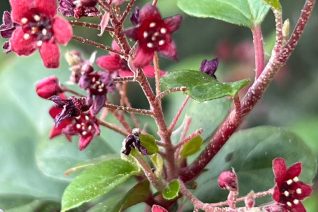
Catalina perfume is the common name for this lovely, tough evergreen currant from Southern California. The round evergreen leaves which do remind one of a Viburnum are resinous and spicily fragrant, especially on warm days. To 3′ tall and spreading about 6′ -this low shrub is best adapted to part shade and little to no summer water. It is incredibly drought adapted. In late winter to mid spring panicle of rose red flowers are light and airy- followed by green fruit. This is an ideal groundcover shrub under native Oaks.  It also makes an almost formal ground cover in landscapes . Found specifically on Santa Catalina in the Channel Islands off of southern CA. There it grows with other Channel island endemics. Tolerates full sun in our climate but its home is beneath the canopy. Water for the first year to establish then none in subsequent years. Not bothered by deer- unsure of rabbits. Prune it if needed after blooming. Blooms on wood from the previous year.  Excellent combined with Vancouveria chrysantha and Camas liechtlinii. for a culture and climate adapted grouping.  Grows very fast when happy.

My Favorites

Plant type: ,  |  Sun exposure: , ,
Biome: , , , , ,  |  USDA Hardiness zone: Zn7b 10º to 5ºFZn8a 15º to 10ºF
Foliage color:  |  Foliage season:


Salvia spathacea

Hummingbird Salvia is a Californian Sage. In rich soil it spreads liberally by underground runners to colonize large areas. That is if winter does not knock it back. Large quilted soft green arrow shaped leaves appear in early spring, by late spring 28″ tall chalice’s of rich red/pink (Raspberry) flowers erupt from dramatic and well spaced whorls. Rich to average soil that drains well. Water well in the first season to establish then very light to none in subsequent years. A Salvia of southern and central California  it has a distinctive aroma that is loved by some, despised by others. Mulch with dry leaves for the first winter or two. Doesn’t like wet plus subfreezing cold. Good, and restrained in a container. Protect containerized plants from extreme cold (below 20ºF). Nice and very dramatic cut flowers. Blooms March repeatedly until June. Great for hummingbirds, butterflies, and pollinators. Semi-deciduous in winter.

My Favorites

Plant type: ,  |  Sun exposure:
Biome: , , , , ,  |  USDA Hardiness zone: Zn8a 15º to 10ºF
Foliage color:  |  Foliage season:


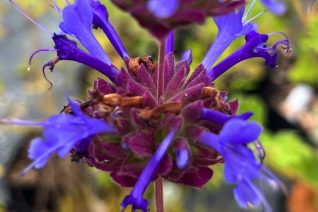
A hybrid between two southern California shrubby Salvias has yielded an amazing plant for our gardens. The parents of this hybrid are S. clevelandii  ‘Alpine’ x S. pachyphylla and it continues the amazing foliage fragrance of Salvia clevelandii and the deep blue flowers in purple bracts echo pachyphylla. A shrub/ sub shrub for the very warmest parts of the garden. Against a south or west facing aspect.  This Salvias parents come from poor, mineral soils and eventually the pale blue foliage builds to  a 30″ x 4′ evergreen shrub. It loses some leaves in harsh winters . In mid to late summer upright stems support whorls that emit striking  long deep blue flowers, these are held in a dark purple calyx – the each whorl is dark purple and showy before and after bloom as well. Takes the hottest locations and appreciates it.  Strategically placed among large boulder that radiate heat is also useful as is in Hell strips where heat builds. The stems elongate in bloom up to 2′ and are lined with mutiple whorls. Perhaps no animal loves this sage or Salvias in general more than hummingbirds. And the radiant blue tubular flowers are perched just for them.  Long blooming aromatic drought adapted sub-shrub.  Good drainage, full sun, and regular water to establish, let it dry between watering during summer.  Mix with Manzanita, Epilobium – Zauschneria, Grevilleas.  Do not cut back until new growth begins in mid spring. Beautiful in bloom. Excellent with a gravel mulch and on south facing slopes.  Protect from prolonged temperatures below 15ºF, cover with a cardboard box or a tarpaulin. Naturally drought adapted.


My Favorites

Plant type: , ,  |  Sun exposure:
Biome: , , , , ,  |  USDA Hardiness zone: Zn8a 15º to 10ºF
Foliage color: ,  |  Foliage season:


Salvia x ‘Christine Yeo’

Very good Salvia that blooms non-stop medium purple flowers for months in summer well into autumn. Tall growing to 3′ and somewhat wispy. A possible hybrid with the blue flowered Salvia chamaedryoides. Hummingbirds love this free blooming hardy perennial. Freezes to the ground below the mid 20’s. Returns from the base in spring. Rich, WELL DRAINED soil in full sun. Drainage in winter is the key. Add some pumice and gravel to the planting hole and water consistently to this plant good and established. Do not cut back in the spring until you actually see new growth pushing. Then remove all the dead material. Regains stature quickly in spring.

My Favorites

Plant type:  |  Sun exposure:
Biome: , , , , ,  |  USDA Hardiness zone: Zn8a 15º to 10ºF
Foliage color:  |  Foliage season:


Salvia x jamensis ‘California Sunset’

These hybrids come in such wonderful colors. This dashing Sage displays light orange flowers on tall stems from spring well into autumn. Forms a semi-woody shrub and relishes good drainage and hot locations. Great seasonal container plant as well. Best way to grow this Salvia is to double dig the soil to incorporate oxygen and then berm it up a bit. Plant and water faithfully all summer to spur bloom as well as increase the plants mass and establishment. This will ensure a sturdy plant going into winter. I wait to prune it back in spring until all danger of frost has past. In these conditions it will endure our coldest winters with no problem. Hell strip loving plant to 30″ x 30″. Hummingbird plant. Long blooming. Light deer resistance.

My Favorites

Plant type: ,  |  Sun exposure:
Biome: , , , ,  |  USDA Hardiness zone: Zn8a 15º to 10ºF
Foliage color:  |  Foliage season:


Senecio vira vira

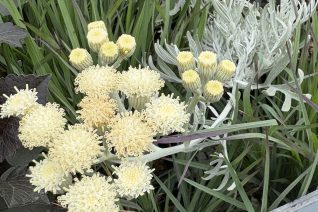
This is a fantastic perennial for soft white/gray foliage and soft cream ray flowers. Wonderful in container plantings this tough plant can squeeze into the tightest places. To 2′ tall x 2′ tall in a season. The bold houndstooth foliage shines with bright or more pastel flowers. Hardy to about 10ºF it is winter deciduous most winters and you can lose it in our hardest winters. Add a little mulch in the autumn to establish and then its fine in subsequent years. Mixes exceptionally well with dark leaved Dahlias or the more pastel flowered Cuphea c. ‘Subhirtella’.  Rich soil with light consistent irrigation in full sun. The petal free flowers are a nice cream color (as opposed to yellow) and marry’s the foliage for a continuous look. Native to the Canary Islands.

My Favorites

Plant type:  |  Sun exposure: ,
Biome: , , ,  |  USDA Hardiness zone: Zn8a 15º to 10ºF
Foliage color: ,  |  Foliage season:


Sphaeralcea ‘Hot Pink’

Globe Mallow. Fun and easy to grow perennial that behaves like a sub-shrub. Semi woody wands of very silvery small maple shaped leaves wave to 3′ tall. Lining these silver stems are bowl shaped hot pink flowers. They begin as early as late May and continue unabated for months. As time goes on this perennial for dry, hot locations with good drainage becomes a showy hot pink mass of blooms. Excellent on hot slopes with light but consistent summer water. Very drought adapted but light water appears to improve the performance. Loved by bees, butterflies and other pollinators. By autumn this 3′ x 3′ shrub should be left intact to over winter. In spring when new growth is breaking from the base it may be cut back hard and recovery to bloom is rapid with the onset of warmer weather. Cold hardier if given very good drainage. As far as I can surmise it will take temperatures down to about 10ºF.  A selection or possible hybrid from two southwestern globe mallows.

My Favorites

Plant type: ,  |  Sun exposure:
Biome: , ,  |  USDA Hardiness zone: Zn8a 15º to 10ºF
Foliage color:  |  Foliage season: