

Charming beyond words this Chilean sub-shrub has been given an informal common name of cup flower. Petite, almost succulent foliage is deeply and irregularly serrated along semi-woody stems to 30″ tall and 3′ wide. In July-October on new wood clusters of downward and outward pointing up shaped soft lilac flowers have an interior of conspicuous spots. Gloriously fun plant for a protected location. Mulch for the first winter or two. Once established it has similar hardiness as hardy Fuchsias. Full sun and rich soil that drains. Regular summer water encourages a fast recovery from the base if frozen. Cut back hard in early spring when all danger of frost has past. Flowering commences with the heat of summer. Protect from blazing afternoon sun. Works well on an eastern aspect. Loved by pollinators and even hummingbirds. Long blooming charming sub-shrub. Not bad in containers, protect containerized plants from temperatures below 15ºF. Wonderful Chilean native. Not a bad cutflower. Related to Calceolaria (Pocket Book Flower). Protected location such as a south or east facing wall is beneficial.The flowers virtually glow.
Plant Type: Sub-shrub

Sub-shrubs are best thought of as woody perennials that can freeze to the ground in winter and regrow from the base in spring. Hardy Fuchsias and Abutilons are two examples of commonly grown sub-shrubs in our climate. The harshness of winter determines how sub-shrubs behave. In colder than normal winters (below 20ºF) they will likely freeze way back or to the ground. Mild winters may see no dieback at all. Refrain from cutting these back until you see new growth emerge- then you’ll know what to remove. Also, if an Abutilon has frozen back (and it will look awful and dead) simply water and water and water well into summer and the recovery that emerges is stunning. A little handful of all organic fertilizer in spring feeds recovery as well. For lightly tender sub-shrubs (zone 8a) and warmer it benefits these plants if they are planted deeply. Sink the crown of the plant 3″ below the soil level and mulch. This adds cold tolerance. Often slightly tender subshrubs will gain hardiness with age when treated this way.
Climate Adapted Plants for Gardeners in the PNW

Lavandula x angustifolia ‘Purity’
We asked the man who knows lavender the best which white Lavender did he recommend? And he fired this off the top of his head and then brought one for us- Thank you Andy Van Helvingen. A REALLY stunning plant. Compact with many CLEAR WHITE flowers in dense clusters at the end of strong straight stems. The plant is compact and grows that way – much slower. To 16″ x 18″ with bloom spikes above. Flowers early June to August. A charming plant that does not cling to discolored brown flowers instead they just kind of melt away so it does have an extra pristine appearance at all time. Shear spent blooms to their base to encourage a more dense and floriferous shrublet in the future. Wonderfully aromatic hybrid with english Lavender. Moderate deer resistance. This would combine in a perfect way with pink and blue flowered varieties- ‘Hidcote’. Avoid planting closely with L. x intermedia, cause those will flop and smother this little gem. Great for small hedges, rock gardens, and herb knots. Pungent for drying, potpourri. Full sun and rich to average soil with reasonable drainage. Not good in shade. Lavenders also require very good air circulation- plant accordingly. Average life span 5-7 years, Light summer water.

Lupinus rivularis
Streambank lupine or Riverbank lupine is widespread shrubby species native to western Oregon. Its full range is from extreme southwest British Columbia (where it is endangered) to northern California. Large growing, spreading plant that can almost achieve a sub shrubby habit. To 3′ tall in bloom forming an evergreen shrublet to 3′ across. From late April to early July spires of blue flowers with a white keel erupt from the plant. Very pretty in bloom and incredibly important to pollinators and insects who feast on the flowers as well as leaves. The true species has flowers that are all blue, its found primarily on sand bars in major rivers on the west side of the state. Most seed that is grown and dispersed is a selected bicolor flower. Short lived plant 3-5 years. Following the flowers conspicuous seed pods turn a dark color, These may be allowed to open and disperse in the OPEN DISTURBED SITES that it craves. Excellent in concert with California poppies where it has become a famous duo on our freeways in the spring. Good cut flower. Not bothered by deer. Water to estalblish then leave it to natural rainfall. Oregon native plant.

Matthoila fruticulosa
Stock, the common early spring cut flower with that is wonderfully fragrant of cloves. The sweet perfume can be detected at quite a distance. This is a cold hardy, PERENNIAL version of that beloved flower. Forming a semi-woody dome like shrub multiple spikes to 10″ long eminate from the crown and bear pristine cleanly white flowers with that dazzling perfume. Great fragrant filler in bouquets. Native to mountainous areas around the mediterranean. To 2′ x 2′ and becoming a multi branched shrublet. Full sun and rich to average soil with light consistent summer water for the first season. Good drainage is important and its a natural plant for a slope. Established plants can get through summer without irrigation. The long strappy leaves are gray/green and add to the overall appeal especially when decked with white flowers. Average life span 5-7 years. Do not coddle. Combines well with Cistus, Halimiums, Helianthemums. Dianthus where it will compete for perfume. Very reminiscent of a Wallflower (Cheiranthus) and accepts the same cultural requirements. Blooms May-August. Pronounced muh-TOY-luh
Melianthus major
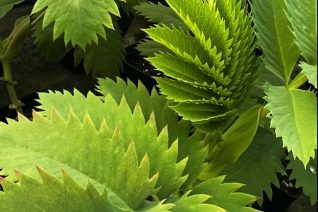
South African Honey Bush that we grow from seed. This bold sub-shrub/perennial entrances people with the large blue symmetrical, pinnate, serrated leaves. Large plant to 6′ x 6′ in 5 years. Semi-evergreen it can freeze to the ground below about 20ºF and will vigorously regrow from the base in spring. Its important that Melianthus be very well established the first season going into its first winter. A large root mass ensures re-sprouting from the coldest winters. If the winter is mild 1′ tall inflorescences of black and red are odd, spectacular, and an ode to goth gardening in early summer. Rich soil that is never boggy in a warm, protected location with regular water to establish. Even if winter is only semi-cruel and the stems stand but with tattered leaves the whole plant can be cut to the ground AFTER ALL THREAT OF FROST HAS PASSED. Mulch for the first autumn w/ dry leaves and compost. Excellent at the base of a warm wall or a south facing aspect. Appreciates good care and water.. Mix with other large, bold perennials- Aralia californica (Elk clover) and Lobelia tupa (Devil’s tobacco) . Very dramatic in containers. Container grown plants should be protected from arctic cold (below 20ºF). The large leaves have the odor of peanut butter when disturbed/bruised. Its pungent and spot on. Not often bothered by deer. Might be somewhat rabbit resistant. Nice bold, tropical affect.We offer two other named cultivars, to be honest any one of these seedlings could be as good or exceed those cultivars.

Melianthus major ‘Antonow’s Blue’
Big and bold and blue this remarkable plant known for its enormous pinnate foliage makes a statement. To 7′ tall and as wide in time. Following mild years madder red rubbery flower spikes bear black flowers. yep. Its very important to establish your Melianthus happily before its first winter. That means you give it rich, well drained soil in full sun with REGULAR summer water. The bigger the root system the more vigorous the plant will return if frozen to the ground (below 20ºF). Luckily in the city this usually happens every four years or so. In colder outlying areas plant it next to a hot south facing wall and nurture the hell out of it. Mulch before arctic episodes is a good thing. Moderate deer resistance. South Africa.

Melianthus major ‘Purple Haze’
Nice selection of Honey Bush that shares tints of purple predominantly when new leaves are unfurling. The enormous blue/lavender serrated leaves are amazing. Lower growing than either the species or ‘Antonow’s Blue’. To 4′ tall (usually shorter) by at least 6′ wide. Red flowers are produced on the black scape that can follow mild winters. Technically a subshrub as it can freeze to the ground and fully recover from the root in a single season. IF it has been well established in its first season. For that reason we only sell Melianthus in 2 gallon sizes. A larger plant establishes faster and has more mass going into winter. Plant in a protected location- against a wall or with light overstory protection. Mulch for the first winter. Freezes to the ground at prolonged temperatures below about 20ºF. Re-sprouts in mid-late spring. Water and fertilize to speed the recovery. South Africa.
Monardella villosa ‘Russian River’
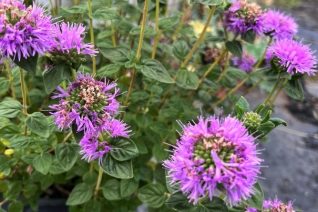
Incredibly long blooming native sub-shrub with clouds of fragrant purple flowers for all of summer into autumn. To 2′ x 2′ forming a semi-woody base. The aromatic round leaves cup the flower buds as the stems elongate. Loved by all native pollinators. A wonderful plant in the mint family that is very easy to grow and long lived for this genus. This selection sports slightly darker purple and longer blooming flowers. Found from Douglas County, Oregon south throughout California. Freezes back in very cold winters but sprouts quickly with warm weather in spring and commences bloom quickly. Great as a mass planting and ideal in a meadow. Also, adaptable to rock gardens and indeed thats where you find it in the wild- among gravel, rocks, and boulders. Mix with other long blooming native perennials such as Erigeron glaucus (sp & cvs) and among California fescue (Festuca californica). A very climate adapted plant. Cut back spent flowers and more will follow. Nice cut flower. Very long blooming. Light summer water to very little when established. Some deer resistance. AKA Showy coyote mint. Oregon native plant.

Phlomis (anitolica) ‘Lloyd’s Variety’
Aka Jerusalem Sage. This is a very compact but floriferous form of this evergreen perennial/subshrub. To 3′ x 5′ and forming a dome of thick gray/green foliage. In summer spikes extend and display yellow flowers in whorls around the stem. Very symmetrical and loved by pollinators. Surprisingly up close it is very fragrant reminding me somewhat of the sweet clovey scent of Dianthus. Long, blooming for 4-6 weeks. Full hot sun and rich to average well drained soil. Ideal on hot slopes. Light summer water aids vigor but it can take very dry conditions once established. Easy to grow, long lived plant. Mix with other hot sun dwellers and other mediterranean natives. Moderate deer resistance. Evergreen.

Phlomis fruticosa ‘Quilted Leaf’
A really handsome and unique form of Jerusalem Sage. The large gray leaves are spongy and quilted and good looking all the time. This woody perennial forms a large spreading plant to 4′ tall and 5′ wide in full sun and rich to average well drained soil. Regular light summer water- to establish then drought adapted. Very drought adapted when established. Blooms June to August in our climate and makes a great paring with smaller low water full sun woody shrubs such as Cistus or Ceanothus. The whorls of soft yellow flowers born on upright stems have the sweet fragrance of cloves in close proximity. A very cool cut flower that lasts for more than a week in a vase. Loses some leaves in winter- gets them back quickly in spring. Wonderful on sunny hillsides. Moderate deer resistance. This form will often have a re-bloom with the return of fall rain. Give it room to spread out horizontally.
- « Previous Page
- 1
- …
- 3
- 4
- 5
- 6
- 7
- Next Page »