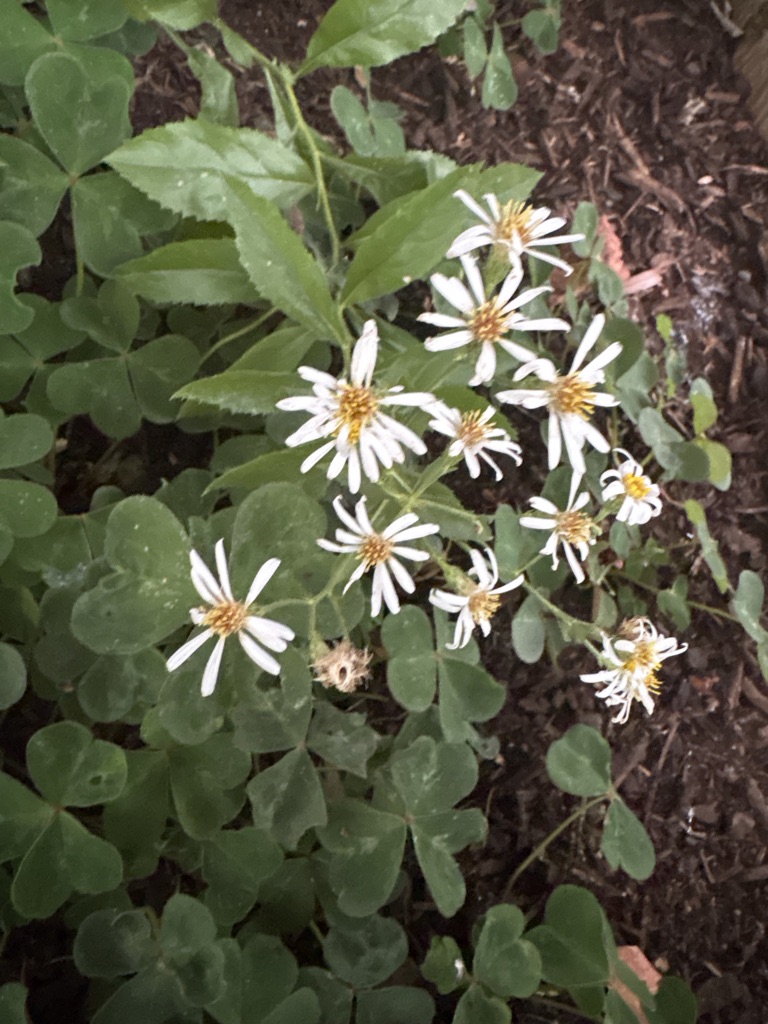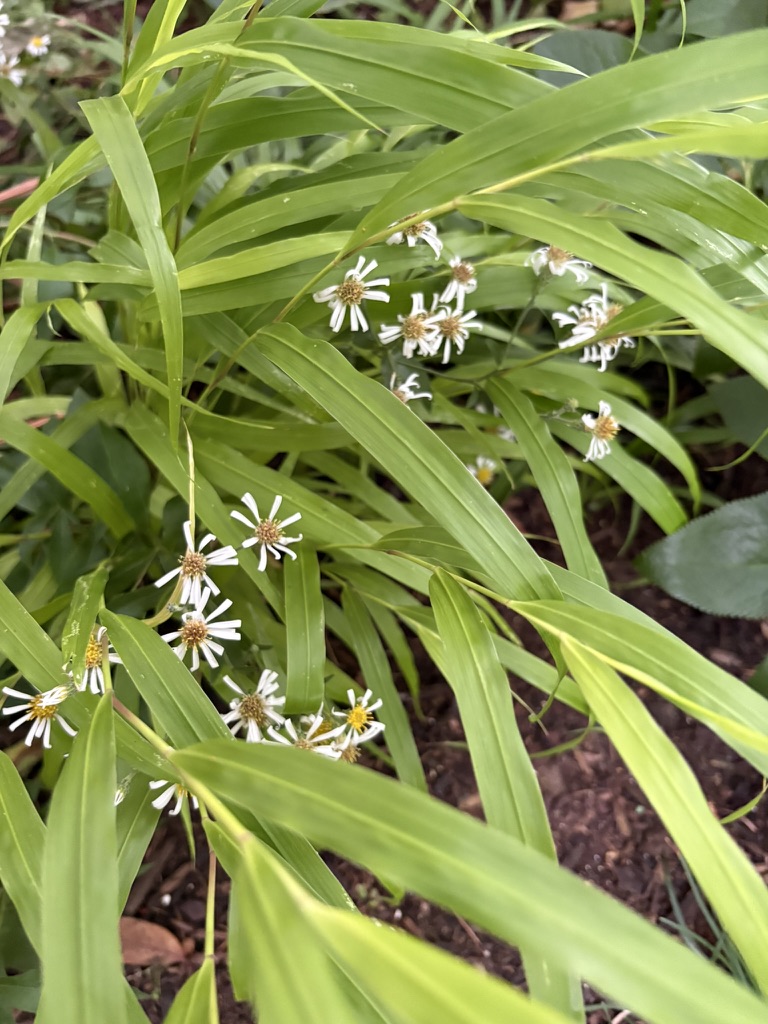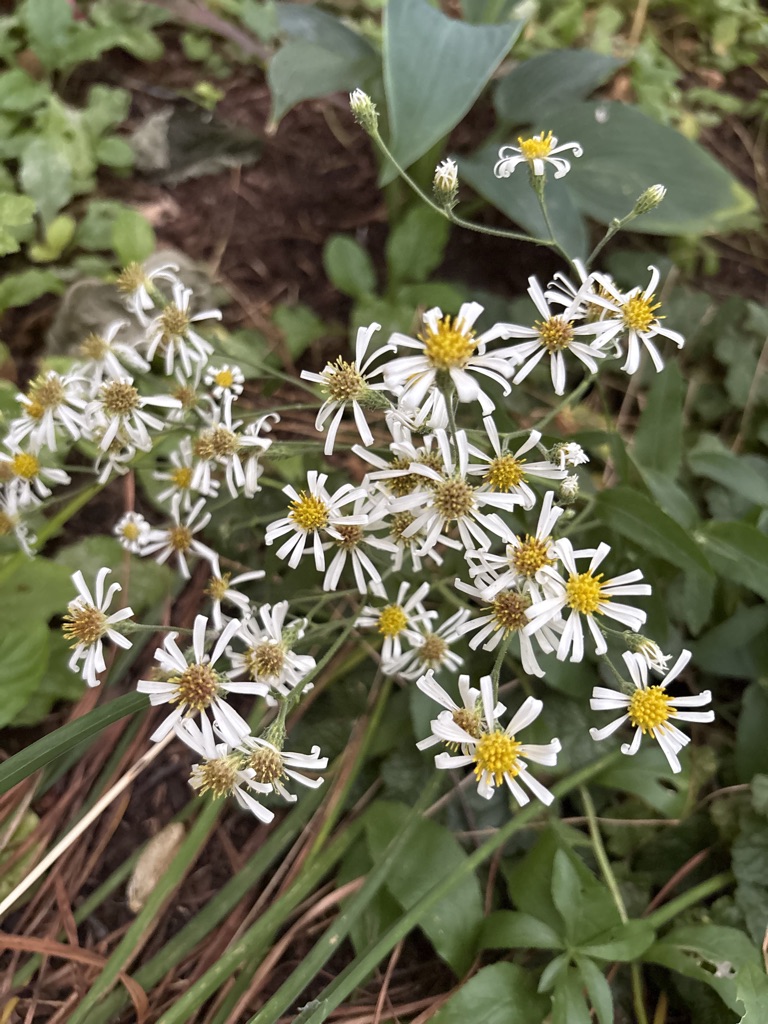
Rough leaf Aster or also referred to as False Aster. The description of a rough leaf is apt and you can immediately identify this inhabitant of dry woods throughout western Oregon and north more sporadically into Western Washington by a rub of the scratchy leaf. It even makes an appearance in the Ochoco Mountains of Central Oregon. My experience with this sprawling, late blooming perennial was as an under story component of black and White Oak woodland in the southern Willamette Valley. At higher elevations it can be found in Fir/Pine woodlands. It is a profuse follower of fires and will quickly occupy recently opened space. Simple white minimalist daisy blooms appear in large clusters from August to October. An established plant is incredibly drought adapted as long as it is out of full sun. The scratchy leaves become smaller near the flower truss . To about 2′ tall but decumbent (trailing) in most circumstances, Adaptable to clay soils that dry in summer. An excellent late season pollinator plant for shade/dry shade. Water regularly the first season in sightly enriched soil in part shade to high overhead shade . Not the showiest perennial but it does its job well. Hardy perennial . Does not compete well with invasive grasses -protect. Best with clumping native grasses primarily California Fescue Festuca californica . Expect this semi-evergreen to flop and accomodate that- 2′ x 2′ but never full. Very easy to grow. Plant with Symphyotrichum hallii Hall’s Aster’ and and Achillea millefolium ‘Willamette Gray’ in a dry understory. Accepts regular summer irrigation as well. Oregon native plant