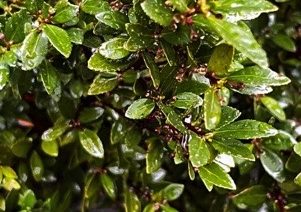

Oregon boxwood or mountain lover, the first name is more descriptive even though the second is also true. This formal looking evergreen is most often seen above about 3500′ in the Cascades, on very steep slopes in humus rich soil. where it forms a common understory beneath conifers. It can also be found in the cool coastal zones and the higher peaks of the Coast Range In eastern Oregon it follows the Ochocos up into the Blue and Wallowa mountains . This is a widespread shrub that is seldom seen in gardens, even in its natural range. This is not a fussy plant but it does have exacting requirements. Amend the soil heavily with compost and water faithfully for the first few years. This formal looking evergreen averages 3′ tall on average and can range a bit wider. It takes some pruning but it does require regular summer water to become established. In the Celastraceae Oregon boxwood is most closely related to Euonyous. This can be seen in the simple 4 petal tiny red flowers that cluster in the leaf axils in spring. Very cold hardy to -30ºF and it ranges far into Canada. One of the best native evergreen shrubs for formal appearance. Plant with Vaccinium ovatum for a similar cultural and textural effect. The small berries are eaten by wildlife. Tolerates extreme snow and ice, not bothered by subfreezing wind. Moderately deer resistant. Associated plants in the wild are Cornus canadensis and Mianthemum stellatum and Mahonia nervosa Pronouncd puh-KISS-ti-muh – or can be remembered as Pa kissed Ma. Oregon native plant.
